
I’ve spent twenty years standing on the firing line, and if there’s one thing I’ve learned, it’s that people love to throw money at problems they don’t actually have. I see it all the time: a shooter starts seeing their shots drift up and down the target, and instead of looking at their own mechanics, they go out and buy a five-hundred-dollar match trigger or a fancy new optic. They think they need more gear, but they actually just need to learn how to diagnose a group that strings vertically before they waste a paycheck. Most of the time, the answer isn’t in your equipment; it’s in your posture or how you’re managing your breathing.
I’m not here to sell you a miracle component or a complex mathematical formula for ballistics. My goal is to walk you through the unglamorous, mechanical reality of what’s happening when your rifle stops behaving. We’re going to look at the actual culprits—from barrel clearance to the way you’re actually pulling that trigger—so you can stop guessing and start shooting. If you want the truth about why your groups are moving, let’s get to work.
Chasing the Ghost Finding Bullet Velocity Consistency Issues

Sometimes, you aren’t fighting your grip or your breathing; you’re fighting the chemistry inside the brass. If your shots are jumping up and down the target in a predictable pattern, I start looking at bullet velocity consistency before I even touch the scope. If you’re handloading, a slight variation in powder charge or a inconsistent seating depth can change the pressure enough to throw your point of impact vertically every single time. Even with factory ammo, if you’re grabbing a handful of boxes from different production lots, you might be chasing a ghost that isn’t even there.
It’s also worth looking at how the rifle is actually behaving when that primer strikes. I’ve seen plenty of shooters blame their eyes when the real culprit is a lack of chassis stability and bedding. If the action isn’t sitting dead-level in the stock, or if your mounting screws have vibrated even a hair loose, the rifle won’t settle into the same repeatable cycle. You aren’t just shooting a projectile; you’re managing a mechanical event. If that event changes slightly between shots, your groups are going to show it.
The Hidden Rhythm of Rifle Barrel Harmonics

If you’ve ruled out your ammunition and your grip, you’re likely fighting the vibration of the steel itself. Every time a round goes off, that barrel isn’t just sitting still; it’s whipping in a specific, repeatable pattern. I call it the “whip,” but the technical term is rifle barrel harmonics. If your rifle isn’t seated perfectly in the stock, or if your chassis stability and bedding is loose, that vibration becomes unpredictable. Instead of the barrel returning to the exact same spot every time, it starts oscillating wildly, which is a one-way ticket to seeing your shots wander up and down the target.
It’s a bit like trying to hit a bullseye with a tuning fork. If the foundation isn’t solid, the rhythm breaks. I’ve seen plenty of shooters spend hundreds on match-grade brass only to realize their vertical dispersion causes were actually just a poorly torqued action screw or a barrel that wasn’t properly supported. You have to treat the rifle as a single, cohesive unit. If the barrel is dancing because it isn’t held steady, no amount of trigger control is going to save your groups.
The Practical Checklist: Where the Vertical Drift Usually Hides
- Check your breathing, but not the way the manuals tell you. It isn’t just about holding your breath; it’s about the timing of the shot. If you’re pulling the trigger right as you’re starting to exhale or, worse, right as you’re gasping for air, you’re going to see those shots climb or dive every single time. Find that natural respiratory pause and stay there.
- Stop looking at your trigger finger and start looking at your grip pressure. If you’re squeezing the life out of the forend or the pistol grip with your non-shooting hand, you’re changing the way the rifle sits in your body. That tension shifts as your muscles fatigue, and that’s a one-way ticket to vertical stringing.
- Look at your recoil management, specifically how much you’re “flinching” or anticipating. Even a tiny, subconscious movement to counter the kick before the bullet leaves the muzzle will throw your vertical plane off. If you feel like you’re fighting the gun instead of letting it work, your groups will reflect that struggle.
- Inspect your ammunition, but don’t just look at the brand. Check for consistency in your reload if you’re handloading, or look for moisture in your brass if you’re using old stock. A single variation in powder charge or a slightly seated bullet can change the pressure enough to make your vertical pattern look like a ladder.
- Re-examine your cheek weld. This is the one most people ignore because they think they’re “stable.” If your head position is drifting even a fraction of an inch between shots—maybe because your position is awkward or your stock isn’t fitting your face right—you’re going to change the angle of the bore relative to your eye. Consistency in the weld is just as important as consistency in the trigger pull.
The Bottom Line on Vertical Stringing
Stop tweaking your scope turret when the problem is actually your breathing or your trigger press; if you aren’t consistent with your body, you’ll never be consistent with the rifle.
Treat your ammunition like a variable, not a constant—if you’re switching brands or lot numbers mid-session, you’re just inviting vertical dispersion into your groups.
Don’t ignore the mechanical basics, like barrel heat or a loose cheek weld, because a rifle that isn’t seated the same way every time will never shoot a predictable pattern.
Getting Back on Target
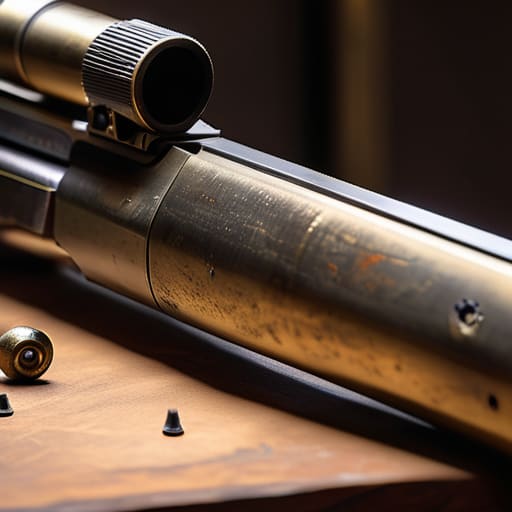
At the end of the day, vertical stringing isn’t some mysterious curse; it’s usually just a symptom of something you haven’t accounted for. We’ve looked at how inconsistent powder charges can mess with your velocity, how the barrel itself vibrates in a predictable rhythm, and how your own physical movement—that tiny, subconscious shift in your grip or stance—can pull a shot up or down the line. If you find yourself chasing these ghosts, stop shooting for a minute and start observing. Check your bench stability, verify your load consistency, and make sure you aren’t fighting the rifle’s natural harmonics. Most of the time, the answer isn’t in a more expensive optic, but in the mechanical details you’ve been overlooking.
I’ve spent twenty years watching folks get frustrated when their groups don’t look like the pictures in the magazines. They want the instant gratification of a tight hole in the paper, but they skip the unglamorous work of understanding why the shots are going where they go. Real proficiency comes when you stop treating every bad group like a failure and start treating it like data. When you learn to diagnose the “why” behind a vertical string, you stop guessing and start mastering. Get the fundamentals of your gear and your habits right, and the tight groups will eventually take care of themselves.
Frequently Asked Questions
If I change my ammunition to a different grain weight, am I just masking a mechanical issue or actually fixing it?
Most of the time, you’re just masking it. If you switch from 150-grain to 168-grain and suddenly your groups tighten up, you haven’t “fixed” the rifle; you’ve just found a load that happens to vibrate more harmoniously with your barrel’s current state. It’s a workaround, not a cure. If the vertical stringing was caused by a loose optic mount or a fouled bore, a different bullet weight is just a bandage on a broken limb.
How can I tell if my vertical stringing is coming from my own inconsistent breathing versus a problem with the rifle itself?
The easiest way to tell is to stop being the variable. If you think it’s your breathing, move to a prone position or use a sandbag rest to take your body out of the equation. If the groups tighten up when the rifle is braced and you’re holding your breath at the natural respiratory pause, you’ve got a breathing problem. If they’re still stringing vertically while the rifle is dead-still on a rest, you’re chasing a mechanical issue.
Is there a way to test if my bipod or rest is actually the thing causing the shift, or am I just chasing my tail with scope adjustments?
The easiest way to find out is to stop fighting the glass and change your platform. If you’re shooting off a bipod, move to a sandbag or a heavy rest for a session. If the vertical stringing vanishes, your bipod isn’t providing a stable foundation—it’s likely shifting or reacting to your breathing. Don’t keep clicking those turrets; you’re just chasing a ghost that’s actually sitting in your support.




