
I see it every single Saturday morning: a shooter shows up to the line, spends a fortune on the latest optics and high-end brass, and then complains they aren’t seeing any progress because they “don’t have time to get to the club.” It’s a load of nonsense. Most people think you need a box of premium ammo and a cleared lane to actually get better, but that’s just an expensive way to mask poor fundamentals. If you’re sitting at home wondering how to train without a range, you aren’t looking for a way to cheat the system; you’re looking for a way to stop wasting your time when you finally do step up to the firing line.
I’m not going to sell you on some fancy laser trainer that costs more than a decent bolt action. I want to talk about the unglamorous, repetitive work that actually builds muscle memory—the kind of stuff you can do in your living room or your garage without making a sound. I’m going to show you how to master the dry-fire habits and the mental checklists that separate the serious shooters from the hobbyists. We’re going to focus on the mechanics that happen before the hammer ever falls, because if you get the small things right at home, the shooting takes care of itself.
Mastering Dry Fire Practice Drills in Your Living Room
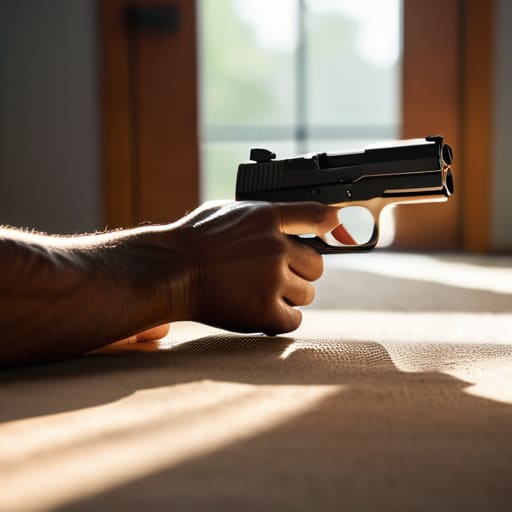
Now, before you even think about pulling a trigger in your living room, we need to talk about the most important part of safe firearm handling indoors: your environment. I’ve seen plenty of folks get overconfident, thinking they can just mimic their range routine on the rug. You don’t. You clear the room, you clear the headspace, and you treat that empty chamber with the same respect you’d give a loaded one. If you aren’t treating a dry gun like it’s live, you aren’t practicing; you’re just playing around.
Once you’ve established that discipline, start with the basics of improving trigger control at home. You don’t need a target to see if your finger is jerking the shot. Use a simple wall or even a small piece of tape. Focus on that slow, steady press until the hammer falls without your sights shifting a hair. This is how you build the muscle memory for shooting that stays with you when the pressure is on at the club. It’s unglamorous, and it’s boring, but it’s exactly how you stop being a person who “sort of” hits the target and start being a shooter.
Improving Trigger Control at Home Through Repetitive Discipline
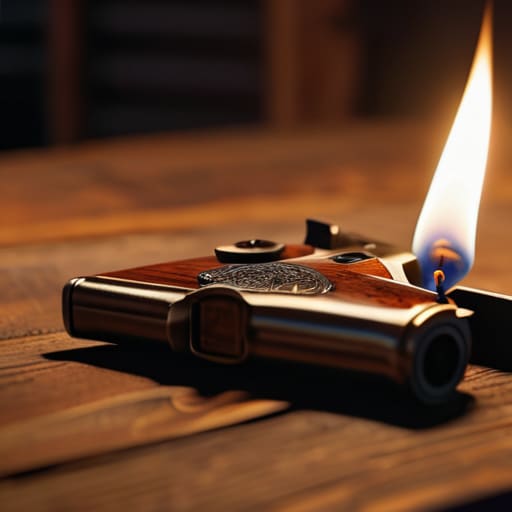
Most people think trigger control is about strength, but after twenty years on the line, I can tell you it’s actually about patience. When you’re at the range, the noise and the recoil often mask a jerky pull, leading to that telltale sight jump. You can’t fix that by just shooting more; you fix it by improving trigger control at home where it’s quiet enough to actually feel the mechanics. I tell my students to focus on the sensation of the sear breaking without the gun moving a hair. If you can’t move a candle flame sitting on your barrel, you’re doing it right.
This isn’t about speed; it’s about building the right muscle memory for shooting so that the movement becomes subconscious. I want you to sit in a chair, clear your workspace, and perform a hundred repetitions of a slow, steady press. You aren’t just pulling a piece of metal; you are learning to isolate that finger movement from the rest of your hand. Do this until the pull feels like a natural extension of your thought process, rather than a sudden, violent jerk.
The Work You Do When the Case is Closed
- Visualizing the sequence. Most folks think shooting is just pulling a trigger, but it’s a mental checklist. Sit in your chair and walk through every single movement—from the way you draw, to your grip, to the way you reset that trigger—without actually touching a piece of steel. If you can’t see it clearly in your head, you won’t do it right on the line.
- Grip strength and muscle memory. You don’t need a target to practice how you hold your tool. Spend time just working on that consistent, firm pressure. I’ve seen more people miss because their hands got tired or sloppy than because they lacked “aim.” Build that hand strength in your downtime.
- Perfecting your stance and balance. Stand in your hallway and find your center of gravity. If you’re wobbling when you’re just standing there, you’re definitely going to be stumbling when the recoil hits. Get that foundation solid enough that it feels like part of your skeleton.
- Cleaning as a training tool. I know it sounds like a chore, but stripping your gear down and cleaning it is how you learn the mechanics. You start to feel where the grit is, where the spring tension is off, and you learn the soul of the machine. A clean tool is a predictable tool.
- The “Safety Check” ritual. This is the most important one. Practice your clearing procedures until they are reflexive. I want you to be able to check that chamber, verify the status, and secure the device while you’re thinking about what’s for dinner. If you have to “think” about safety, you aren’t safe yet.
The Bottom Line
Skill isn’t built in 20-minute bursts at the range; it’s built in the quiet, repetitive moments at home where you fix the habits nobody sees.
If you can’t maintain discipline and safety protocols in your living room, you have no business being on a live line.
Focus on the fundamentals of trigger press and sight alignment until they are muscle memory, because the range is for testing what you already know, not for learning it.
The Work Happens in the Quiet
At the end of the day, getting better isn’t about how many rounds you burn through on a Saturday morning; it’s about the discipline you show when nobody is watching. We’ve talked about the importance of dry fire, the necessity of perfecting that trigger press in your living room, and the value of repetitive, boring drills. If you can master your fundamentals without the distraction of recoil or the noise of a live line, you’ve already won half the battle. It’s the unseen work—the cleaning, the muscle memory, and the constant mental rehearsal—that separates the people who just shoot from the people who actually know how to handle a firearm.
I’ve spent twenty years watching folks walk onto my line, and the ones who impress me aren’t the ones with the most expensive gear or the loudest voices. They’re the ones whose movements are smooth, deliberate, and practiced. They don’t fumble with their controls because their hands already know where everything is. Remember, the range is just where you go to verify your progress, not where you go to find it. Do the work at home, keep your habits tight, and when you finally step up to that lane, the shooting will take care of itself.
Frequently Asked Questions
How do I know if my dry-fire technique is actually improving my real-world accuracy or if I'm just practicing bad habits in my living room?
That’s the million-dollar question. The danger with dry fire is that you can get real good at being wrong. If you’re practicing a sloppy grip or a jerky trigger pull in your living room, you’re just etching those mistakes into your muscle memory. You’ll know it’s working when you get back to the line and your natural point of aim feels effortless, and those “surprise” shots you’re looking for actually start happening.
What are the best ways to simulate recoil or movement at home without actually having live rounds on a line?
You can’t replicate the physical punch of a live round, and trying to fake it usually leads to bad habits. Instead, focus on managing the “reaction.” Use a weighted training tool or a dummy gun to practice your follow-through. If you want to simulate movement, do your draws or transitions while walking on a treadmill or even just stepping side-to-side in your hallway. It’s about teaching your body to stay stable when the world isn’t standing still.
Is there a way to practice reloading and manipulation drills safely in a small space without risking a mishap?
You can, but you have to be disciplined. I’ve seen too many people treat home manipulation like a game. If you’re working on reloads or malfunctions in a small space, use dummy rounds—snap caps only. No live brass, no primers, no exceptions. Treat every piece of equipment as if it’s loaded. If you can’t maintain that mental distinction between a training tool and a live round, you shouldn’t be doing it at all.




