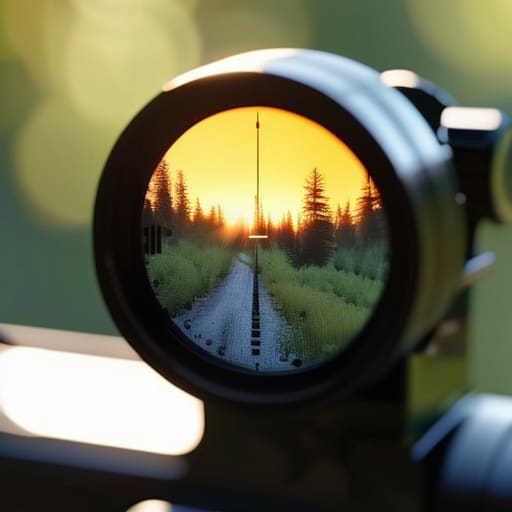
I’ve spent twenty years watching folks on the Saturday morning line pull the trigger on what should have been a perfect shot, only to watch the bullet drift wide for no apparent reason. They’ll swear the wind picked up or that their hold was off, but more often than not, they’re fighting a ghost in their optics. You can have the most expensive glass and the steadiest trigger finger in the county, but if you don’t know how to adjust a scope for parallax, you’re essentially just guessing. It’s a subtle, invisible error that turns a precision tool into a glorified paperweight when the distance starts to matter.
I’m not here to sell you on some high-tech, complicated theory that requires a degree in physics. I want to show you the practical discipline of getting your eye alignment right so your reticle actually stays on target. We’re going to walk through the actual mechanics of the adjustment, the common mistakes I see shooters make when they think they’ve got it dialed, and how to verify your work before you ever load a single round. If you get these basics down, the shooting part starts to take care of itself.
Guide Overview
Tools & Supplies
- Rifle or Air Rifle with mounted scope
- Target or stationary object at varying distances
- Eye protection for safety
- Target paper or cardboard (1 sheet)
- Shooting rest or sandbags (1 set)
Step-by-Step Instructions
- 1. First, you need to get yourself into a stable position. I’ve seen too many folks try to dial in their glass while sitting on a folding stool or leaning awkwardly against a barricade. If your body is moving, your eyes are moving, and if your eyes are moving, you’ll never find the true zero. Get behind your rifle, settle into your prone position or your tripod, and make sure your head is resting naturally against the cheek weld.
- 2. Once you’re settled, look through the glass at your target and find the adjustment dial—the parallax knob—on the objective bell. Don’t start turning it randomly; that’s how you end up fighting your own reticle. Instead, focus on the target image itself. You’re looking for the point where the target looks the most crisp and defined, without any fuzzy edges or ghosting around the silhouette.
- 3. Now comes the part where most people get lazy. While looking through the scope, I want you to slowly move your head up, down, left, and right. You aren’t moving the rifle; you’re moving your eye relative to the lens. If the target seems to “shift” or dance around within the reticle as you move your head, your parallax is off. You want that target to stay dead center in the crosshairs regardless of how much you wiggle your eye.
- 4. Start making small, deliberate adjustments to the parallax knob. Turn it slowly—think of it like fine-tuning a lathe rather than cranking a wrench. Watch the target image through the scope as you turn. You’ll notice the image will go soft, then gradually sharpen up. Keep turning until that image stops getting clearer and starts getting blurry again, then back it off just a hair.
- 5. Once you think you’ve hit the sweet spot, perform the “wiggle test” one more time. Move your head around the scope as we discussed in step three. If the target stays rock steady in the center of your reticle while you move, you’ve found it. If it still drifts, you haven’t accounted for the distance properly, and you need to go back to step four.
- 6. Finally, double-check your distance setting. If you’re shooting at 100 yards, make sure that knob is set to 100. It sounds simple, but I’ve seen shooters try to use a 50-yard setting for a long-range precision shot, and they spend the whole afternoon wondering why their groups look like buckshot. Verify your distance, lock in your setting, and only then should you worry about your actual windage and elevation.
Mastering the Parallax Error Correction Method
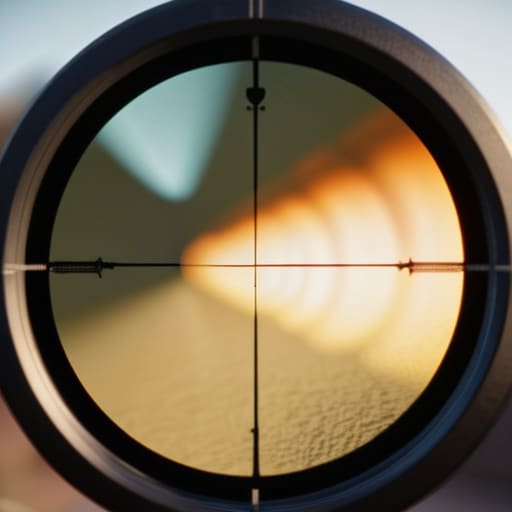
Now, once you’ve got the mechanics down, you need to understand the nuance of why we bother. Most folks think they’re zeroed because they hit the bullseye at fifty yards, but they fail to realize that parallax vs focus adjustment is a different beast entirely. If you aren’t accounting for the shift in your eye position, you’re just chasing a ghost. I’ve seen plenty of shooters get frustrated with a rifle that won’t group, only to realize they were fighting a shifting reticle because they hadn’t mastered the relationship between eye relief and parallax.
When you’re out on the line, don’t just turn the dial and walk away. I tell my students to use a consistent parallax error correction method: pick a specific point in your field of view and ensure the reticle stays pinned there, even if you shift your cheek weld slightly. It’s about building muscle memory for that stability. If you can’t maintain a steady picture while you’re breathing, you aren’t actually zeroed; you’re just lucky. Precision is a habit, and that starts with how you settle into the stock.
Why Eye Relief and Parallax Dictate Your Precision
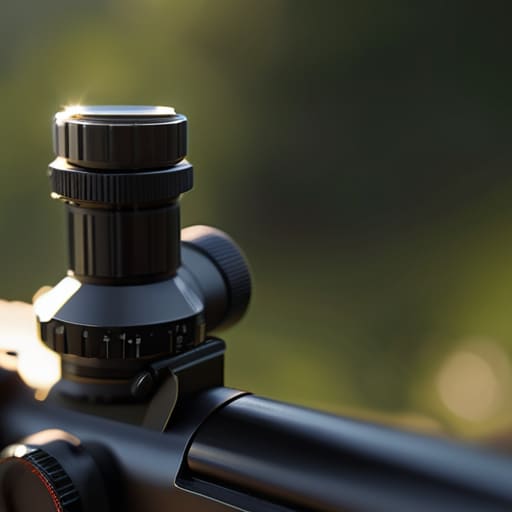
You can spend all morning dialing in your windage and elevation, but if you haven’t settled your relationship with the glass, you’re just chasing ghosts. Most folks think a scope is a static window, but it’s actually a dynamic system. The truth is that eye relief and parallax are inextricably linked; if your head position shifts even a fraction of an inch between shots, you’re essentially changing the geometry of your sight picture. I’ve seen plenty of shooters get frustrated with their groups, only to realize they were moving their cheek weld every time they squeezed the trigger.
When you’re out there zeroing a scope for distance, you have to realize that a shifting eye position creates a false sense of where that reticle is actually sitting. If you aren’t consistent with your distance from the lens, you’ll experience a shift in the perceived riflescope reticle alignment. It’s not just about the knob on the side of the scope; it’s about the discipline of your physical stance. If you don’t master your eye relief, no amount of adjusting the side parallax knob is going to save your accuracy.
Five Ways to Stop Chasing Your Own Shadow
- Don’t trust your eyes when you’re tired; if you feel like you’re fighting the adjustment, step away from the bench, grab a coffee, and come back when your focus isn’t drifting.
- Stop trying to “eyeball” the reticle movement; use a consistent target at a known distance so you actually have a baseline to measure against instead of just guessing.
- Check your cheek weld every single time you adjust; if you shift how your face sits on the stock after dialing, you’re going to create a new error that has nothing to do with the parallax itself.
- Remember that parallax adjustment isn’t a substitute for proper eye relief—if you’re too far forward or too far back in the scope, you’ll never get a true reading on that reticle shift.
- Do your fine-tuning in the daylight, not under a dim flashlight or at dusk; you can’t correct what you can’t clearly see, and half the battle is just being able to observe the subtle movement of the crosshairs.
The Bottom Line on Parallax
Parallax isn’t just a technical setting; it’s a discipline. If you don’t dial it in at your specific target distance, you aren’t actually shooting the target—you’re shooting a ghost of it.
Stop blaming your trigger squeeze or your breathing for missed shots until you’ve checked your parallax. It is the most common invisible error I see on the line, and it’s the easiest one to fix.
Consistency is your best friend. Set your parallax, find your eye relief, and then stop messing with it. You want your rifle to be an extension of your eye, not a puzzle you’re trying to solve mid-string.
The Discipline of the Dial
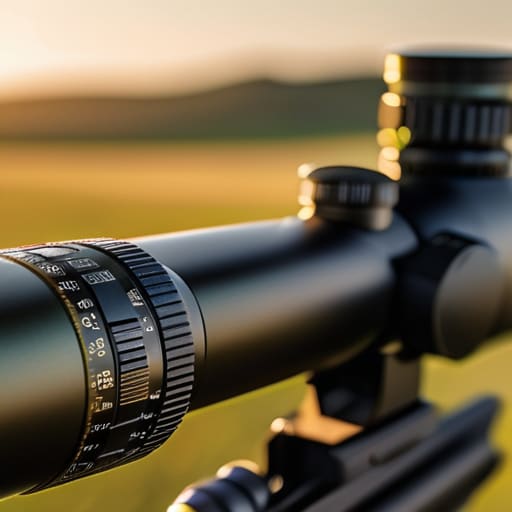
At the end of the day, adjusting your parallax isn’t some fancy trick for the long-range specialists; it is a fundamental part of your pre-shot routine. We’ve talked about finding that sweet spot where the reticle stays dead center regardless of how your eye moves, dialing in the adjustment for your specific distance, and understanding how your eye relief plays into the whole equation. If you skip these steps because you’re in a hurry to start pulling triggers, you aren’t just being lazy—you are inviting error into your grouping. I’ve seen plenty of shooters blame their wind or their trigger squeeze when the real culprit was a shifting reticle they didn’t bother to lock down before the first shot.
I know it feels unglamorous to sit there clicking dials and staring at targets before you’ve even loaded a single round. Most people just want to get to the shooting part, but the shooting is only as good as the preparation behind it. When you take the time to master these small, repetitive checks, you stop fighting your equipment and start working with it. Make it a habit, not a chore, and you’ll find that the results on the paper start to take care of themselves. Get the fundamentals right, and the precision will follow.
Frequently Asked Questions
Does it actually matter if I'm shooting at short distances, or is parallax only an issue for long-range precision?
It matters more than most people realize. Even at fifty yards, a shifting eye position can move your point of impact enough to miss a small target. If you aren’t dialing that parallax, you aren’t actually shooting the rifle; you’re just hoping your eye stays in the exact same spot every time. Don’t let a short-range mistake become a bad habit. Get it set right now, or you’ll be chasing shadows later.
If my scope doesn't have a dedicated parallax adjustment knob, how am I supposed to account for that error?
If you’re looking at a fixed parallax scope, you can’t dial it out, so you have to manage it through discipline. First, you need to find your “sweet spot” for distance—that’s the range where the reticle stays crisp. Once you know it, you stay consistent with your distance. More importantly, you have to be disciplined with your cheek weld. If your head moves, your parallax moves. Keep your eye in the same spot, every single time.
Can a bad eye relief setting trick me into thinking I have a parallax problem when I actually don't?
Short answer is yes. I’ve seen it a hundred times on the line. If you’re too far back or too close to the glass, the image will dance or blur every time you move your head. You’ll start fiddling with the parallax adjustment, thinking the scope is off, when really, you just haven’t found your sweet spot. Get your eye relief dialed in first. If the image is still jumping, then you’ve got a parallax issue.




