
I’ve spent twenty years standing on the line at the club, and if there’s one thing I’ve learned, it’s that people love to throw money at problems they don’t actually have. I see shooters walk into the shop ready to drop a grand on a custom match trigger or a high-end optic just because they can’t figure out how to diagnose a group that strings horizontally. They think it’s a gear issue, some magical failure of the steel or the glass, but more often than not, it’s just a mechanical habit they’ve been repeating since they first picked up a rifle.
I’m not here to sell you a new bolt action or a fancy piece of kit to fix a problem that’s likely living in your own hands. My goal is to strip away the guesswork and show you exactly what to look for when your shots start wandering left and right instead of staying tight. We’re going to talk about the uncomfortable basics—the grip, the stance, and the way you’re actually interacting with the rifle—because once you get those habits straight, the accuracy usually follows.
Group Behavior Analysis Techniques for the Gritty Truth
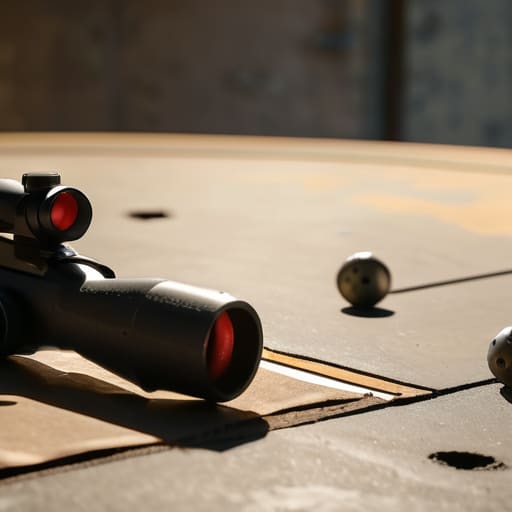
When you’re sitting on the bench, don’t just look at where the holes are; look at how they got there. I’ve spent years using different group behavior analysis techniques to figure out if a shooter is fighting the gun or if the gun is fighting itself. If you see a line of shots stretching left to right, your first step isn’t to adjust your sights. It’s to look at your physical rhythm. Most folks think it’s a complex ballistic mystery, but more often than not, you’re just pulling the rifle off-line during the recoil because your grip is inconsistent or your stance is leaning.
You also have to rule out the world around you before you start blaming your hands. I always tell my students to look for environmental factors in stringing before they go digging into their trigger control. If those shots are drifting in one direction consistently, you might just be fighting a steady breeze you haven’t accounted for. If the pattern stays the same regardless of the wind, then you know you’ve got a mechanical habit to fix. Watch the pattern, not just the bullseye.
Diagnostic Methods for Stringing Phenomena You Cant Ignore

The first thing I do when I see a line of shots drifting left to right is look at the paper, then I look at the sky. You have to rule out the easy stuff before you start tearing apart your fundamentals. If you’re shooting on an open range, wind impact on stringing formation is usually the primary suspect. I’ve seen plenty of shooters go down a rabbit hole of blaming their trigger press when, in reality, a fifteen-knot gust was just pushing their projectile off-axis. Watch how the pattern shifts as the breeze picks up; if the string follows the wind, it isn’t a mechanical failure, it’s just physics.
If the air is dead calm, then we move into more specific diagnostic methods for stringing phenomena that involve your own body. I always tell my students to check their cheek weld and their grip consistency. If you aren’t seating your face in the same spot every time, or if your hands are getting sweaty and losing that firm, even pressure, your point of impact is going to wander. It’s rarely a sudden “error”; it’s usually a slow, creeping inconsistency in how you settle into the rifle.
Five Ways to Spot the Culprit
- Check your grip tension first. If you’re squeezing the life out of the frame on the left side of the shot and then relaxing as you get tired, you’re going to see that pattern start to drift left or right. It’s a mechanical inconsistency, not a “bad aim” issue.
- Watch your elbow. If you’re shooting from a bench and your support arm is migrating or your elbow is flaring out as the string goes on, you’re changing the geometry of the shot. A shifting platform means a shifting group.
- Look at your trigger finger. If you aren’t pulling straight back and you’re actually “hooking” or pushing the trigger to the side during the press, you’re going to jerk the muzzle laterally. It’s a habit that shows up in the group before it shows up in your head.
- Evaluate your recoil management. If you’re letting the gun snap back and you aren’t getting it back to center before the next shot, you’re essentially chasing the gun across the target. That horizontal string is often just the distance your hands traveled between shots.
- Don’t ignore the hardware. If the grouping is consistent but the string is wide, go check your mounts. A loose optic screw or a poorly seated rail won’t necessarily cause vertical dispersion, but it’ll make your zero wander side-to-side like a drunk sailor.
The Bottom Line on Horizontal Strings
Stop chasing your trigger pull; if your groups are stretching wide, your grip or your stance is likely fighting the recoil before the bullet even leaves the barrel.
Treat your equipment like a tool, not a toy—check your mounting screws and your grip tension, because a loose component will mimic a bad habit every single time.
Consistency is built in the boring parts, so if you can’t stabilize your body position, no amount of fancy trigger training is going to fix a horizontal string.
Bringing the Pattern Back Together

At the end of the day, a horizontal string isn’t some mystery of physics; it’s a mechanical symptom. Whether you’re fighting a heavy-handed grip that’s jerking the muzzle or a trigger finger that’s pulling the gun to the side, the solution is always found in the repetition of the basics. You’ve looked at the grip, you’ve checked your finger placement, and you’ve likely even inspected your stance to see if you’re leaning too far into the shot. Don’t let the frustration of a wide group lead you to start changing too many variables at once. Isolate the movement, fix one habit, and then get back on the line to see if the pattern responds.
I’ve spent twenty years watching people chase “feel” when they should have been chasing consistency. It’s easy to get discouraged when your groups look more like a line than a circle, but that’s just the sport telling you where your foundation is soft. Shooting well isn’t about having a perfect, natural talent; it’s about the disciplined work you do when no one is watching. If you can master the unglamorous mechanics of a clean trigger press and a steady hold, the tight groups will come. Stick to the process, keep your eyes on the fundamentals, and trust the mechanics.
Frequently Asked Questions
If I've already ruled out my grip and my stance, could my ammunition be the reason for the horizontal stretch?
It’s a possibility. If your stance and grip are solid, you have to look at the brass. I’ve seen plenty of folks blame their eyes when the real culprit is inconsistent powder charges or a bad seating depth. If your ammo is inconsistent, your point of impact is going to wander. Do a small test: swap to a different, high-quality lot. If that horizontal string tightens up, you’ve found your problem.
How do I tell the difference between a mechanical issue with the rifle and a simple habit in my trigger press?
The easiest way to tell is to swap the variables. If you’re shooting a bolt action and the group stays wide even when you’re focused on a slow, steady press, it’s likely mechanical—maybe a fouled chamber or a loose optic. But if you switch to a different rifle and the pattern suddenly tightens up, you’ve found your answer. It wasn’t the gun; it was your finger. Fix the habit before you go buying new parts.
Is there a specific way to practice my follow-through so I stop pulling the shots wide to one side?
If you’re pulling wide, you’re likely “peeking”—trying to see the impact before the recoil settles. To fix that, stop focusing on the target and start focusing on the reset. Practice dry-firing at home. Focus on keeping your eye on the front sight post through the entire trigger press and the subsequent reset. Don’t let your head move or your grip loosen until the sear clicks. If you can’t do it perfectly dry, you won’t do it under recoil.




