
I’ve spent twenty years standing on the line at the club, and if there’s one thing I can count faster than a new shooter’s chamber checks, it’s the number of people trying to “eyeball” their accuracy. I see it every Saturday: someone puts five rounds downrange, looks through the spotting scope, and tells me they’ve got a “tight group” because the holes look close together. Stop doing that. If you aren’t using a tool to figure out how to measure group size properly, you aren’t actually training; you’re just guessing. There is a massive difference between a group that looks decent and a group that actually measures a quarter inch, and if you don’t know the difference, you’re wasting your time and your brass.
I’m not here to sell you some high-tech laser system or a fancy software subscription. I want to show you the unglamorous, mechanical way to get the truth from your rifle. We’re going to talk about using simple calipers, why the center of the hole matters more than the edges, and how to keep a log that actually means something. My goal is to help you stop chasing ghosts and start seeing real, measurable progress.
Why Extreme Spread Measurement Lies to You
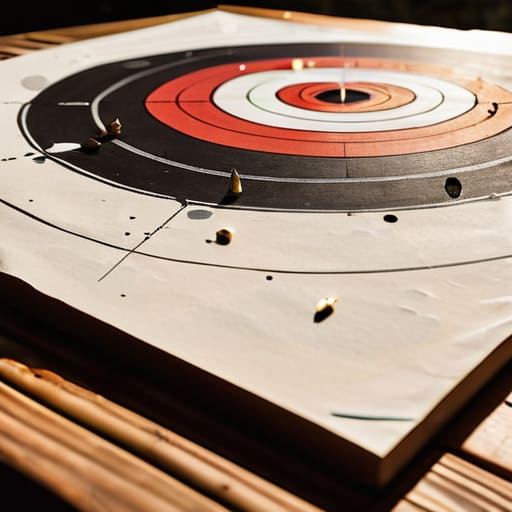
Most folks walk up to a target, find the two shots that are furthest apart, and call that their group. They use that extreme spread measurement to tell their buddies how tight they’re shooting, but honestly, it’s a lie. If you have four shots in a tight cluster and one stray round that wanders off into the dirt, that single outlier defines your entire score. It doesn’t tell you how the rifle is actually performing; it just tells you that you had one bad moment.
If you want to know what’s actually happening with your kit, you have to look at the whole picture. Relying on the edges of a pattern is a shortcut that hides more problems than it solves. Instead, you need to move toward a proper mean radius calculation. This looks at how far, on average, every single shot sits from the center of the cluster. It’s a more honest way to look at your consistency, and it’s the only way to tell if you’re actually improving or just getting lucky with a few well-placed rounds.
The Precision Shooting Techniques That Actually Matter
If you want to stop playing guessing games with your gear, you need to move past just looking at the paper. The first thing I tell my students is to stop relying on the distance between your two widest shots. Instead, start practicing mean radius calculation. This involves finding the center of your cluster and measuring the average distance of every single shot from that middle point. It gives you a much more honest look at how your rifle is actually performing over a full magazine, rather than letting one lucky outlier or one bad trigger jerk skew your entire perception of accuracy.
Once you’ve got the math down, you need to get serious about your tools. I’ve seen plenty of folks try to eyeball a hole or use a ruler, but if you’re serious about precision shooting techniques, you need to be measuring shot groups with calipers. A digital caliper doesn’t care about your optimism; it gives you a hard number that you can track in a logbook over six months. When you combine that data with a proper shot dispersion analysis, you stop wondering why your groups look “okay” and start seeing exactly where your consistency is breaking down.
Five Ways to Stop Guessing and Start Measuring
- Put the ruler away and use calipers. If you’re trying to eyeball the distance between holes with a standard tape measure, you’re just playing pretend. You need a pair of digital calipers to get an actual decimal reading; otherwise, you’re just rounding up to make yourself feel better about a sloppy string of shots.
- Measure the center of the group, not just the edges. A lot of folks think a group is just the distance between the two furthest holes, but that’s a fluke waiting to happen. You want to find the mean center of those impacts. If you aren’t calculating where the shots are actually clustering, you aren’t seeing the real pattern.
- Track your “flyers” separately. I’ve seen guys get frustrated because one shot went wide and ruined their average. Don’t just lump it in and call it a bad group. Note the outlier, figure out if it was a wind gust or a bad trigger press, and then measure the tight cluster that remains. That’s your true capability.
- Keep a consistent log of your measurement method. If you measure one day using extreme spread and the next day using mean radius, your progress chart is going to look like a heart monitor. Pick one way to do the math and stick to it every single time you step onto the line.
- Use a target with a high-contrast center. It sounds simple, but if you’re shooting at a washed-out paper target in bright sunlight, you’re going to misjudge the hole size. Use a target that makes the impact clear, because if you can’t see exactly where the lead entered the paper, your measurement is just a guess.
The Bottom Line on Tracking Your Progress
Stop relying on extreme spread to tell you how you’re doing; it only takes one outlier to make a mediocre shooter look like a marksman, so focus on the mean radius to see your real improvement.
If you aren’t using calipers to get an actual measurement, you’re just playing a guessing game with your training.
Consistent measurement isn’t about ego; it’s about having the data to know whether you need to work on your trigger press or if your gear is the problem.
Stop Guessing and Start Tracking
At the end of the day, measuring your groups isn’t about ego or proving you’re the best shooter on the line. It’s about the data. If you keep relying on extreme spread, you’re just chasing ghosts and ignoring the actual consistency of your rifle. By using calipers and tracking your center-of-impact, you move away from guesswork and toward a real understanding of how your gear and your technique interact. You need to know if that one flyer was a bad trigger press or a mechanical hiccup in the bolt. Measure the hole, not the distance between the outliers, and you’ll finally have the information you need to actually improve.
I’ve spent twenty years watching folks walk onto the range thinking they’re shooting well because they hit the black. But true proficiency is found in the details that most people find tedious. It’s in the cleaning, the meticulous measurement, and the discipline of the process. Don’t get discouraged when the numbers don’t move as fast as you’d like; precision is a slow build. Just keep your eyes on the data, keep your habits tight, and trust that the consistency will follow the math. If you get the fundamentals of your measurement right, the shooting will eventually take care of itself.
Frequently Asked Questions
If I'm shooting at a distance where the holes are too small to see clearly, is there a way to get an accurate measurement without a spotting scope?
If you can’t see the holes, you aren’t really measuring; you’re just guessing, and guessing is how bad habits take root. If a spotting scope isn’t an option, you need to move closer or change your target. Use a larger, high-contrast paper or a target with larger aiming points. If the distance is the problem, shoot at a closer range until you can clearly see the impact. Precision starts with seeing the truth.
Does it matter if I measure from the center of the hole or the edge of the impact, especially when using different types of targets?
It matters because if you aren’t consistent, you aren’t measuring anything. If you measure from edge to edge on a paper target, but switch to measuring from the center of the hole on a steel plate, your data is useless. Pick one method—I always recommend measuring from the center of the impact to the center of the impact—and stick to it. Consistency in your measurement is just as important as consistency in your trigger squeeze.
How often should I be measuring my groups to actually see if my training is working, rather than just chasing a single good string of fire?
If you’re only measuring after a single string of fire, you aren’t training; you’re just gambling on a good mood. I tell people to measure every single session, but more importantly, you need to track the averages over a week or a month. One tight group could be luck or a clean barrel. A consistent trend in your averages? That’s actual progress. Measure the work, not just the highlights.




