
I’ve spent twenty years standing on the firing line, and if there’s one thing I’ve learned, it’s that most people think learning how to call your own shots requires some high-tech ballistic computer or a fancy new optic that costs more than my first truck. They sit there staring at their target, waiting for the equipment to tell them what happened, instead of actually listening to the rifle. They treat the shot like a math problem to be solved by a gadget, when in reality, it’s a conversation between your eyes, your ears, and your trigger finger.
I’m not here to sell you on a new piece of gear or some complicated theory you’ll forget by the time you reach the parking lot. I want to talk about the unseen mechanics of the shot—the subtle shifts in recoil, the specific snap of the primer, and the way your body feels right before the break. I’m going to show you how to build a mental map of your hits so you can stop guessing and start knowing. We’re going to focus on the honest feedback your rifle gives you, because once you master that, the gear becomes secondary.
Mastering Target Acquisition Techniques and Visual Focus on Front Sight
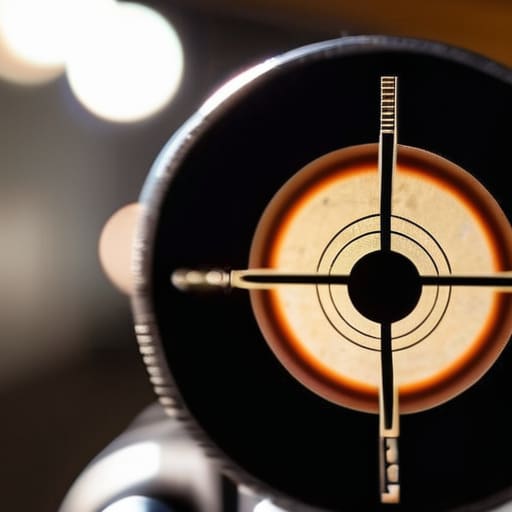
Most folks walk onto the line thinking their problem is a heavy trigger or a shaky hand, but usually, the issue starts with where they’re looking. If you’re staring at the bullseye, you’ve already lost the battle. You have to train your eyes to prioritize that visual focus on front sight above everything else. It’s a strange sensation at first—the target becomes a blurry shape while the iron or the red dot becomes the only thing that’s crisp. If that front sight isn’t sharp, you aren’t actually aiming; you’re just guessing and hoping for the best.
Once you get the eyes right, you have to bridge the gap between seeing the sight and actually driving the shot. This is where your target acquisition techniques meet your physical stability. I see it all the time: a shooter gets a perfect sight picture, but then they rush the process because they’re anxious to see the impact. You can’t force the shot. You have to settle into the sight, let the image stabilize, and then work through the press. It’s about being deliberate. If you aren’t seeing the front sight clearly at the moment of ignition, you aren’t calling a shot; you’re just pulling a trigger.
Why Improving Trigger Control Is the Foundation of Every Decision
You can have the best target acquisition techniques in the world, but if your finger is jerking the trigger, you’re just guessing where the bullet went. I’ve spent twenty years watching people stare intensely at their front sight, only to pull the gun off-target the moment they decide to squeeze. They call it a “flinch,” but most of the time, it’s just a lack of discipline. You have to understand that improving trigger control isn’t about strength; it’s about the ability to apply steady, rearward pressure without disturbing the alignment you worked so hard to establish.
When you start analyzing shot placement on the paper, you’ll notice a pattern. If your group is consistently low and to the left, you aren’t just having a bad day—you’re likely anticipating the bang. You can’t accurately call your own shots if you aren’t the one in control of the break. You have to treat the trigger press like a mechanical process, something as predictable and deliberate as the machine work I used to do. If you can’t master the squeeze, you’re just a passenger on the ride.
The Post-Shot Audit: Five Ways to Stop Guessing and Start Knowing
- Stop looking at the group size and start looking at the pattern. A tight cluster in the wrong place is just a well-executed mistake; you need to identify if you’re pulling low or leaning left before you even pick up the rifle again.
- Learn to separate the equipment from the shooter. If you’re seeing a consistent vertical string, don’t blame the barrel or the ammo first; check your follow-through and see if you’re jerking the trigger on the break.
- Respect the “why” behind the miss. When you call a shot, you aren’t just saying where the bullet went; you’re diagnosing why it went there, whether it was a visual failure on the front sight or a physical failure in your grip.
- Use a mental checklist for every single round. I’ve seen plenty of shooters get lucky with a good group, but luck isn’t a repeatable skill; you need to be able to tell me exactly what your eyes were doing the moment the hammer fell.
- Keep a physical log that isn’t just about scores. Write down the conditions and how the gun felt; half the battle in calling your shots is realizing that your “bad” day was actually just a case of improper cleaning or a fouled bore.
The Three Pillars of the Shot Process
Stop looking for the hole in the paper; start looking for the mistake in your hands. If you aren’t identifying exactly where your sight alignment failed, you aren’t calling a shot, you’re just guessing.
Your decision to fire must be a deliberate action, not a reaction to a feeling. If you find yourself “surprised” by the recoil or the bang, you’ve lost control of the process before the hammer even fell.
Consistency is the only way to build a mental map of your accuracy. You have to be willing to call a bad shot a bad shot, rather than pretending it was a “close enough” hit, or you’ll never fix the underlying habit.
The Discipline of the Result

At the end of the day, calling your own shots isn’t about being a psychic; it’s about the mechanical honesty of your process. You can’t fix what you refuse to acknowledge. If you’re ignoring your front sight focus or treating the trigger like a light switch rather than a controlled press, you aren’t actually shooting—you’re just guessing. By connecting your visual acquisition to your physical input, you stop looking at a group of holes on a paper target and start seeing the direct result of your own decisions. It’s about closing that loop between what your eyes see and what your fingers do, making sure that every shot is a conscious choice rather than a lucky accident.
I’ve spent twenty years watching people walk down the range, and the ones who truly progress are never the ones trying to shoot the fastest. They are the ones who have the patience to sit with a single shot, analyze the failure, and adjust their grip or their breath before the next round goes downrange. Don’t get discouraged when your “calls” don’t match the paper for a while. Mastery is a slow build, much like restoring an old rifle—it takes time, a bit of grit, and a lot of unseen work. Keep your habits tight, keep your eyes focused, and eventually, the target will start telling you exactly what you need to hear.
Frequently Asked Questions
How do I know if my shot went low because of my trigger press or because I'm actually aiming low?
That’s the million-dollar question. If your groups are tight but consistently low, you’re likely aiming low or compensating for something. But if your groups are opening up and drifting downward, that’s your trigger finger jerking the gun. I tell my students to watch the front sight through the whole press. If you see it dip or jump right as the hammer falls, you aren’t pulling; you’re flinching or jerking.
What should I do if I'm calling my shots one way, but the target shows a completely different pattern?
If your eyes say center mass but the paper says low and left, stop shooting. You’re fighting a ghost. Usually, it’s one of two things: you’re anticipating the bang and flinching, or your grip is changing the moment that sear breaks. Don’t just keep pulling the trigger hoping for better luck. Slow down. Go back to your fundamentals, check your hand position, and make sure you aren’t trying to “help” the gun fire.
Is it better to call my shots immediately after every single pull, or should I wait until I've finished a full string of fire?
If you’re looking for a quick ego boost, wait for the string. But if you’re looking to actually get better, call them one by one. I’ve seen too many shooters fire five rounds, see a group, and assume they’re dialed in, when really they just drifted halfway through the string. Treat every single trigger pull like its own decision. If you can’t identify why shot number two went low before you pull shot number three, you aren’t shooting; you’re just practicing bad habits.




