I’ve spent twenty years standing on the line at the club, and if there is one thing I’ve learned, it’s that people love to spend hundreds of dollars on high-speed cameras and fancy tactical holsters before they even understand the basics. They think they need a professional setup to master their fundamentals, but they’re usually just masking a lack of discipline with expensive gear. Most folks think they’re learning when they’re actually just practicing dangerous habits at high speed. If you want to know how to practise drawing without risk, you don’t need a video analyst; you need to learn how to respect the mechanics of the movement before you ever think about adding speed to the equation.
I’m not here to give you a flashy seminar or sell you a training kit. My goal is to walk you through the unglamorous, repetitive work that actually builds muscle memory without turning your living room into a liability. I’m going to show you the specific, procedural checks that I’ve watched thousands of shooters miss, and how you can integrate them into your dry fire routine. We’re going to focus on the boring stuff—the stuff that keeps you and everyone around you safe—because once those habits are locked in, the speed will come on its own.
Mastering Muscle Memory Training Without Ammunition
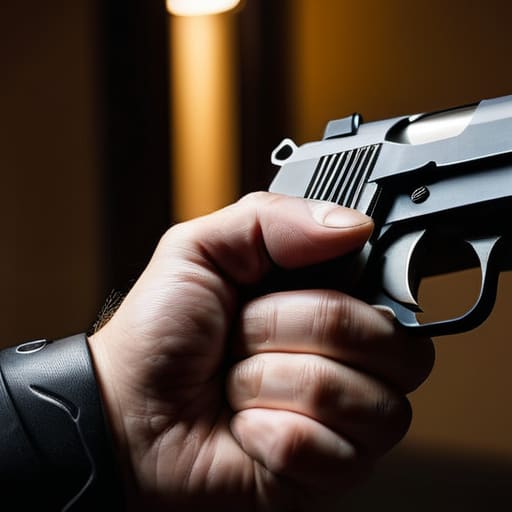
The biggest mistake I see on the line isn’t a lack of skill; it’s a lack of discipline during the quiet hours. Most folks think they only need to be “on” when there’s brass flying, but the real work happens when the gun is empty. If you want to get your holster draw mechanics down, you have to treat your dry fire sessions with the same gravity as a live range day. I’ve seen too many people get sloppy because they think “it’s just a drill,” and that’s exactly when a finger finds its way to a trigger that shouldn’t be touched.
When you’re working on muscle memory training without ammunition, your environment is your first line of defense. I tell my students to set up in a dedicated, controlled space—a corner of the garage or a quiet room—where you aren’t distracted by pets or kids running through. You need to establish strict dry fire training safety protocols before you even touch your belt. That means a cleared chamber, a visual inspection, and a mental reset. If you can’t maintain perfect muzzle discipline while you’re just practicing your movement, you have no business adding live rounds to the equation.
Hardening Your Dry Fire Training Safety Protocols

Now, here is where most folks trip up. They get so caught up in the rhythm of the draw that they let their guard down because there’s no bang at the end of the movement. I’ve seen it a hundred times: a shooter gets into a flow with their holster draw mechanics, feeling real smooth, and suddenly they forget to verify that the chamber is actually empty. You have to treat a dry drill with the same grim respect as a live fire string. If you wouldn’t do it on the range, don’t do it in your living room.
To do this right, you need to build a ritual into your dry fire training safety protocols that makes checking the action automatic. Before you even touch your holster, I want you to perform a physical inspection—eyes on the chamber, finger on the magazine release—every single time. You aren’t just practicing a draw; you are practicing the discipline of being certain. When you establish these unloaded firearm handling drills as non-negotiable, you stop relying on luck and start relying on your training. That is how you turn a habit into a safeguard.
The Four Checks and a Half
- Clear the chamber, then clear it again. I don’t care if you just did it five minutes ago; when you’re practicing a draw, you treat that tool like it’s loaded until you’ve physically seen the brass is gone and the breech is empty.
- Establish a “Safe Zone” for your holster. If you’re practicing draws in a living room or a garage, pick one specific spot where the gun stays, and don’t move that spot. You need to know exactly where your feet are in relation to where the weapon is sitting.
- Use a dummy round every single time. If you’re working on your draw stroke, use inert snap caps. It lets your brain build the muscle memory of the movement without the subconscious “what if” that happens when you’re handling live steel.
- Watch your muzzle direction like a hawk, even when you’re “empty.” I’ve seen guys get so caught up in the speed of the draw that they swing the barrel toward their own feet or a roommate walking by. If the muzzle isn’t pointed in a safe direction, the drill is over.
- Mind your finger. This is the one everyone misses when they get excited about speed. Your finger stays indexed along the frame until the gun is fully drawn and your sights are on the target. A fast draw with a finger on the trigger isn’t practice; it’s a mistake waiting to happen.
The Bottom Line on Dry Fire Safety
If you’re practicing draws, the first rule is that the gun stays empty until the moment you’re actually on a live range; dry fire is for the mechanics, not for playing with live rounds in your living room.
You need to treat every empty chamber like there’s a round in it, because muscle memory doesn’t know the difference between a dummy round and a live one once you’re at the line.
Safety isn’t a separate task you do before you start training; it’s the very first movement of the drill, starting with a physical, visual check of that chamber every single time.
The Discipline of the Dry Run
At the end of the day, practicing your draw isn’t about how fast you can whip that iron out of the holster; it’s about the unseen discipline you maintain when nobody is watching. We’ve talked about the necessity of working without live ammunition, the importance of a cleared chamber, and the strict protocols required to turn a movement into a reliable habit. If you skip the boring stuff—the double-checks, the cleared workspace, the physical verification—you aren’t training; you’re just playing with fire. You have to treat your dry fire sessions with the same unflinching respect as you would a live-fire course on a Saturday morning.
I’ve stood on the range for twenty years, and I can tell you that the shooters who excel aren’t the ones looking for shortcuts. They are the ones who understand that safety isn’t an obstacle to practice, but the very foundation of it. When you master these habits, you stop thinking about the mechanics and start trusting your hands. That trust is earned through a thousand small, correct decisions made in the quiet of your own living room. Build that foundation right, and you’ll find that when it actually matters, your training takes care of itself.
Frequently Asked Questions
If I'm practicing my draw in my living room, what's the absolute minimum setup I need to make sure I don't accidentally clear a holster with a live round in the chamber?
Before you even touch that holster, you need a dedicated “clearing station.” I want to see a physical, visual confirmation. That means a locked empty box or a dedicated tray on your table. Your firearm stays in that box until the moment you’re ready to drill. And don’t just trust your eyes; run your finger through the chamber yourself. If I see you reaching for a holster without that visual check, we’re stopping right there.
How do I know if I'm actually building good muscle memory or if I'm just reinforcing a dangerous habit because I'm rushing the movement?
Slow down. If you have to rush to make the movement feel “real,” you aren’t practicing; you’re just rehearsing a mistake. I tell my students to watch their hands. If your grip shifts or your finger wanders toward the trigger guard because you’re trying to hit a certain speed, you’re just cementing a bad habit. Real muscle memory is slow, deliberate, and repeatable. If you can’t do it perfectly in slow motion, you shouldn’t be doing it fast.
Is there a specific way to check my gear or my holster during dry fire to make sure the equipment itself isn't becoming a safety hazard?
You’ve got to look at your gear like a machinist looks at a tool—if it’s out of spec, it’s dangerous. Before you even touch that grip, check your holster tension. If it’s getting loose, your draw becomes unpredictable. Check your retention hardware for any hairline cracks or loose screws. If a screw is backing out, that’s how a gun slips during a transition. If the gear feels “off,” stop. Don’t train with faulty equipment.




