I’ve spent twenty years standing on the firing line, and if there is one thing that drives me up the wall, it’s watching a shooter spend five hundred dollars on a high-end red dot only to struggle because they have no idea how to co witness iron sights. People treat optics like they’re magic wands that replace fundamental skills, but that’s a dangerous way to look at a tool. I’ve seen plenty of folks get frustrated when their dot sits way above their iron sights, thinking their gear is broken or misaligned, when really, they just haven’t mastered the mechanical relationship between the two.
I’m not here to give you a technical manual filled with fluff or tell you that you need a specialized mounting kit to fix it. What I want to do is show you the actual, physical habit of aligning those two sight planes so they work as one unit. We’re going to talk about eye relief, height-over-bore, and finding that sweet spot where the reticle and the irons actually settle together. If you get this right, you aren’t just shooting better; you’re building a reliable system that won’t fail you when the lights go out.
Mastering Sight Picture Alignment Under Pressure
When you’re sitting on the bench at home, everything feels easy. You’ve got all the time in the world to nudge that front post until it looks just right. But when you’re actually on the line, or if you’re moving through a drill, that perfect alignment tends to vanish. Under pressure, your eye wants to hunt for the dot, and you’ll find yourself neglecting the iron sights entirely. That’s where the trouble starts. If your sight picture alignment is off because you were rushing the setup, you aren’t just missing shots; you’re fighting your own equipment.
I’ve seen plenty of folks realize too late that their mounting height for red dot sights was too high, leaving them with nothing but a blurry mess where the irons should be. If you haven’t accounted for that red dot sight optic height during your initial setup, you’ll be staring at a ghost of a sight picture when you need it most. Don’t wait until you’re breathing hard to realize your irons are useless. Check your alignment while you’re calm, so it’s there when things get loud.
The Truth About Red Dot Sight Optic Height
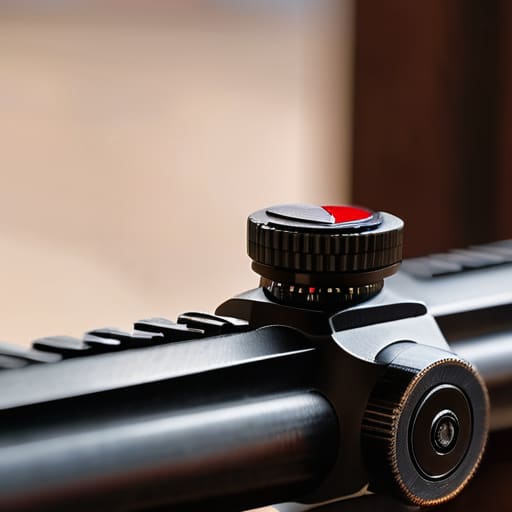
Most folks walk into the shop, slap a red dot on a rail, and act surprised when their iron sights look like they’re sitting on a different planet. The reality is that your mounting height for red dot sights dictates everything about how those irons will behave in a pinch. If you’ve got a high-rise mount—the kind designed to let you shoot from a cheek weld rather than a chin weld—you aren’t going to be co-witnessing. You’re looking at offset iron sights vs co-witness, where those backup sights are sitting way off to the side of your dot. It’s not a malfunction; it’s just how the geometry works.
If you want those irons to actually sit inside that glass circle, you need a low-profile setup. I’ve seen too many shooters try to fight the physics of a tall optic, getting frustrated because they can’t find a clear sight picture. You have to understand that red dot sight optic height is a trade-off between speed and redundancy. If you want the ability to transition to irons seamlessly, you have to plan for that height before you ever tighten the first mounting screw.
Five Habits to Keep Your Sights from Fighting You
- Stop chasing the dot. If you’re trying to force the red dot to sit perfectly dead-center in your iron sight notches while you’re moving, you’re going to lose the fight. Learn to accept a “good enough” alignment where the dot is clearly within the bounds of your irons; it’s better to have a functional sight picture than a perfect one that you can’t actually see.
- Watch your cheek weld, not just your eyes. I see it every Saturday—shooters get a great optic height, but they’re hovering their heads like they’re afraid of the stock. If your face isn’t consistently hitting that comb, your eye won’t be at the same height relative to the irons, and your co-witness will jump around like a live wire.
- Mind the parallax. Just because the dot looks like it’s sitting right on your front post doesn’t mean it is. If you shift your head even a fraction of an inch, that dot might actually be an eighth of an inch off your target. You need to train your brain to recognize when the relationship between the optic and the iron is actually true.
- Don’t neglect the mechanical zero of the irons. If you’ve got a red dot that’s dialed in but you haven’t actually checked where your iron sights are pointing, you’re asking for trouble. If the dot goes dark or you’re forced to go to backup sights, you need to know exactly where that lead is going to land.
- Practice the transition under fatigue. It’s easy to co-witness when you’re sitting in a comfortable chair at home. It’s a different story when your heart rate is up and your hands are a little shaky. Drill the sight acquisition until it’s a subconscious habit, so you aren’t squinting and searching when it actually matters.
The Bottom Line on Co-Witnessing
Don’t treat your iron sights like a backup plan you only look at when the dot fails; you need to practice seeing both simultaneously so the transition is muscle memory, not a frantic scramble.
Height over bore isn’t just a theory—if you don’t understand exactly where your point of impact shifts when you’re using those irons, you’re going to be surprised by where that lead ends up at close range.
A clear sight picture is a habit, not a lucky break. If you’re squinting or fighting the optic height, you’ve already lost the shot; get the alignment settled before you even think about squeezing the trigger.
Making It Muscle Memory
At the end of the day, co-witnessing isn’t some high-level tactical maneuver; it’s just about understanding how your iron sights and your optic play together in the same space. We’ve talked about why that optic height matters and why your alignment has to hold up when your heart rate starts climbing. If you can’t see those irons clearly through the glass when the red dot fails, you’ve got a massive gap in your setup. Don’t just assume it’ll work because the manual says so. You need to actually verify that sight picture on the range, over and over, until you aren’t even thinking about where the front post sits anymore.
I’ve spent twenty years watching folks struggle with gear that was perfectly fine, simply because they hadn’t practiced the fundamentals of their specific setup. A rifle is a tool, and like any tool, it only works as well as the person operating it. Stop looking for the magic optic or the fancy mount and start focusing on the consistent habits that make your gear reliable. Get your alignment right, get your checks down, and the shooting will take care of itself. Now, go out there and get some trigger time.
Frequently Asked Questions
What do I do if my iron sights are sitting so low in the window that I can't actually see them while the red dot is on?
If your irons are buried so low they’re just a black blur in the window, you’ve got a mounting problem, not a sight problem. You’ve likely got an optic that’s sitting too high or a mount that’s eating up all your real estate. You need a lower-profile mount or a different optic altogether. Don’t try to “muscle through” it by squinting; that’s how you lose your sight picture when things get moving.
If I'm shooting a low-profile mount, is it even possible to get a decent co-witness, or am I just fighting a losing battle?
You aren’t fighting a losing battle, but you are definitely changing the math. With a low-profile mount, you’re moving away from a clear, “window” style co-witness and heading toward what I call a “kill point” alignment. You won’t see the irons perfectly framed; instead, you’ll be looking through the dot with the iron sights partially obscuring the view. It takes practice to stop fighting the visual clutter, but once the muscle memory clicks, it’s perfectly functional.
How do I know if my zero is actually holding when I transition from the dot to the irons under stress?
The only way to know is to prove it to yourself on the range, not in your head. You need to run drills where you intentionally drop the dot and transition to the irons. Don’t just aim for the bullseye; aim for the same point of impact you get with the optic. If you’re pulling low or left when the red dot disappears, your co-witness isn’t a habit yet—it’s just a theory.




