
I’ve spent twenty years standing on the edge of the shotgun line, and if I had a nickel for every time I saw a shooter buy a five-hundred-dollar custom comb or a high-tech optic just to fix a broken swing, I’d have retired from the club a decade ago. People get caught up in the gear, thinking the secret to how to lead a moving clay is hidden in the weight of their stock or the brand of their shells. It isn’t. Most of the guys I see struggling aren’t fighting the bird; they’re fighting their own overthinking. They try to calculate the geometry of the shot in their heads like they’re doing high school algebra, and by the time they’ve finished the math, the clay is nothing but orange dust in the wind.
I’m not here to sell you on fancy equipment or complicated mental gymnastics. What I want to do is strip away the noise and talk about the actual mechanics of the movement—the stuff that happens when you finally stop trying to aim and start learning how to follow. I’m going to show you how to simplify your visual tracking and smooth out your transition so that hitting the target becomes a natural byproduct of your rhythm, not a stressful chore.
Predicting Target Flight Path Before the Trigger Breaks
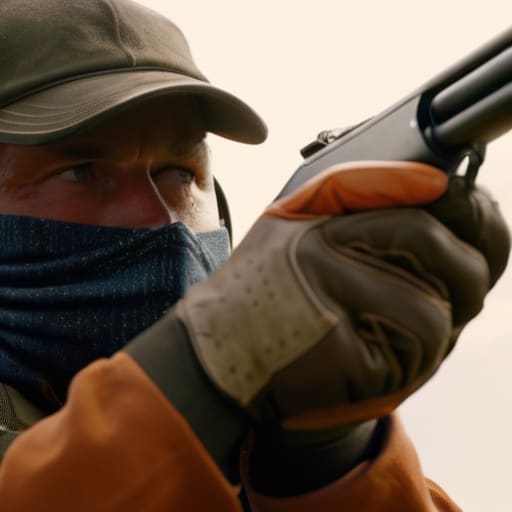
The biggest mistake I see on the line isn’t a bad pull; it’s a delayed brain. People wait until the bird is already in their field of vision to start thinking, and by then, they’re already behind the shot. You can’t wait for the clay to arrive; you have to be predicting target flight path the second it breaks the trap. I tell my students to look at the launch angle and the speed, not just the color of the bird. If you can visualize where that clay is going to be in two seconds, your body will naturally follow.
Once you have that mental map, it becomes about the geometry of your movement. It isn’t about snapping the gun toward the bird; it’s about a steady, rhythmic sweep. You want to focus on your shotgun barrel placement relative to the line of travel, ensuring you aren’t “chasing” the target with your eyes. If you find yourself jerking the gun at the last second, you’ve lost the rhythm. Stay ahead of the bird, keep your movement fluid, and let the physics do the heavy lifting for you.
Mastering Clay Target Tracking Techniques Through Steady Vision
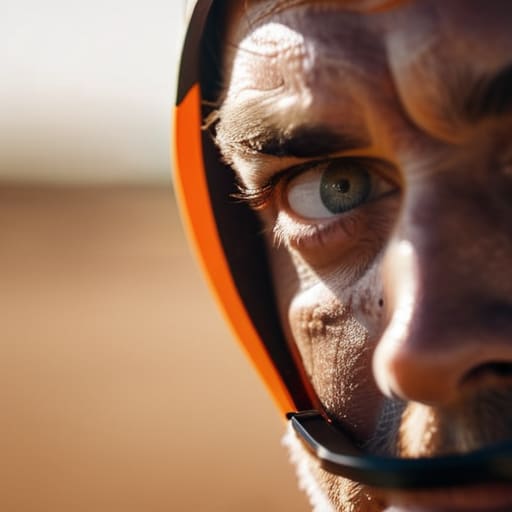
The biggest mistake I see on the line isn’t a bad trigger pull; it’s a wandering eye. People tend to stare at the barrel, watching the bead try to find the bird, and by the time they actually “see” the target, they’ve already missed it. You can’t steer a shotgun with your eyes if you’re looking at the steel. To get better, you have to commit to the bird. You need to focus your gaze on the leading edge of the clay and keep your eyes locked there throughout the entire movement.
This is where most folks struggle with clay target tracking techniques. They treat the target like a snapshot rather than a continuous motion. If your vision jumps or hitches, your gun will too. You want to develop a visual flow that allows for a smooth follow through technique, where your eyes lead the way and the gun simply follows the path your vision has already carved out. If you can master that visual connection, the mechanics of the shot tend to settle into place without you having to fight them.
Five ways to stop chasing the bird and start meeting it
- Stop looking at your barrel. If your eyes are glued to the bead, you’re seeing the world through a straw and you’ll never catch the flight path. Keep your eyes up and focused on the bird itself, not the tool in your hands.
- Let the movement come from your hips, not your wrists. When you try to “flick” the gun with your hands to catch up to a target, you’re going to jerk the shot and miss by a mile. Smooth, rhythmic movement starts at the core.
- Don’t hunt for the perfect moment to pull the trigger. If you find yourself waiting for the “right” second, you’ve already lost the rhythm. Trust the lead you’ve established and let the shot break naturally as the gun moves through the plane.
- Maintain a constant speed. One of the biggest mistakes I see is a shooter who starts slow, realizes they’re behind, and then accelerates frantically right before the shot. That’s a recipe for a broken pattern. Pick a pace and hold it.
- Keep your gun moving through the target. A common habit is to stop the gun the moment the trigger is pulled. If you freeze the gun on the bird, you’ll likely pull the shot. You have to swing through the target as if the shot had already happened.
The Three Pillars of a Clean Break
Stop chasing the bird with your barrel; focus on your eyes staying ahead of the target so your body can naturally follow the line.
Keep your movement fluid and avoid the “jerk” at the moment of impact, because a sudden twitch in your lead is the quickest way to send a cloud of dust behind the target.
Trust the rhythm of the flight path you’ve already mapped out in your head, rather than trying to make a correction once the target is already in your field of vision.
The Rhythm of the Hit
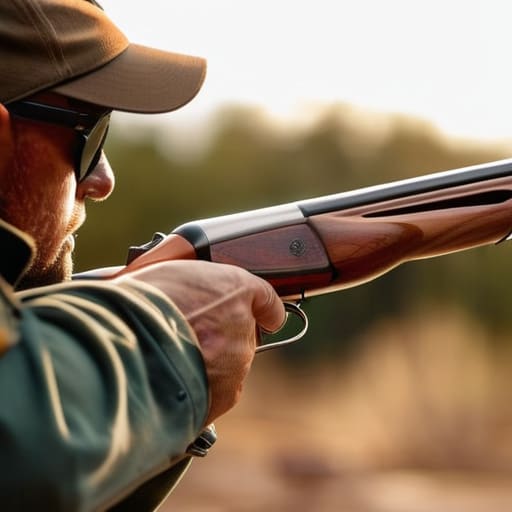
At the end of the day, leading a bird isn’t about some complex mathematical formula you calculate in your head while the target is mid-air. It’s about the work you do before you even mount the gun. It’s about predicting that flight path early, keeping your eyes locked on the target rather than your barrel, and maintaining a steady, fluid motion that doesn’t stutter when the pressure is on. If you find yourself chasing the bird or jerking the stock, stop. Go back to the basics of your visual tracking and your pre-shot routine. When you stop trying to force the hit and start trusting your fundamentals, the lead becomes a natural part of the movement rather than a chore you’re struggling to complete.
I’ve stood on this line for twenty years, and I’ve seen plenty of shooters walk away frustrated because they couldn’t “find” the target. The truth is, you don’t find the target; you let the target find your pattern. Shooting clays is a discipline of patience and repetition. Don’t get discouraged by a string of misses; instead, treat every broken bird as a result of a correct habit and every miss as a lesson in where your vision failed you. Get the mechanics right, keep your head steady, and eventually, you won’t even be thinking about the lead anymore. You’ll just be shooting the sport.
Frequently Asked Questions
How much lead is actually enough before I start overcompensating and pulling my shots?
Look, there isn’t a magic number of inches you can measure with a ruler. If you’re trying to calculate distance, you’ve already lost the bird. You’ll end up chasing the target, which is just a fast way to start pulling your shots wide. Instead, focus on the relationship between the bird and your barrel. If you’re hitting behind, you’re rushing the swing. If you’re hitting in front, you’re too eager. Just stay smooth.
Should I be focusing my eyes on the bird itself, or am I looking at the space where I expect it to be?
Look, I’ve seen folks stare at the empty air where they think the bird is going, and it’s a recipe for a missed target. You have to keep your eyes locked on the bird itself. If you lose the physical target, you lose the rhythm. Think of it this way: your eyes track the bird, and your brain handles the math of the lead. Focus on the clay, stay smooth, and let the pattern find it.
How do I keep my gun movement smooth when I feel that sudden urge to jerk the trigger as the target crosses my eye?
That urge to jerk is usually just your brain trying to “catch” the bird before it’s ready. You’re anticipating the hit. To fix it, stop thinking about the trigger and start focusing on the follow-through. Keep your eyes moving through the target, not just at it. If you treat the shot like a continuous motion—where the trigger press is just a quiet part of the swing—the gun stays smooth. Don’t fight the bird; let the swing happen.




