
I’ve watched plenty of folks spend a small fortune on high-speed tactical gear and “dynamic” courses, thinking that if they just move fast enough, they’ll look like the professionals on TV. But here’s the truth: most of that high-speed, low-drag nonsense is just a recipe for a muzzle pointing somewhere it shouldn’t. People get so caught up in the adrenaline of trying to figure out how to shoot on the move that they completely forget the most basic rule of the line. They trade their discipline for speed, and in my twenty years on the range, I’ve seen that trade cost people their confidence—or worse.
I’m not here to sell you on some Hollywood version of combat shooting. What I want to do is strip away the theatrics and talk about the actual mechanics of keeping your platform stable while your feet are doing work. We’re going to focus on the unglamorous stuff: your weight distribution, your eye tracking, and the deliberate steps that keep your muzzle discipline intact. If you get the foundation right, the movement becomes a secondary thought rather than a dangerous distraction.
Body Mechanics for Tactical Movement the Foundation Nobody Mentions

Most folks think movement is just about how fast you can get from point A to point B, but they forget that your feet dictate what your hands can actually do. If you’re bouncing like a kid on a trampoline, you’ve already lost the fight. You need to focus on your center of gravity; keep your weight slightly forward and your knees soft. When you try to maintain a stable shooting stance during motion, you aren’t looking for a static, rigid posture. You’re looking for a controlled, rhythmic glide. If your upper body is oscillating wildly because your stride is too long, your sight picture is going to be a mess.
I’ve seen plenty of shooters try to compensate for a shaky gait by gripping the frame harder, but that’s just a recipe for fatigue. Instead, lean into the body mechanics for tactical movement that prioritize a stable core. You want your hips to act as the shock absorbers for your torso. If you can keep your head level and minimize that vertical bobbing, your visual tracking and target acquisition will stay sharp enough to actually hit something. It’s about finding that steady rhythm amidst the chaos.
The Silent Struggle of Recoil Management on the Move
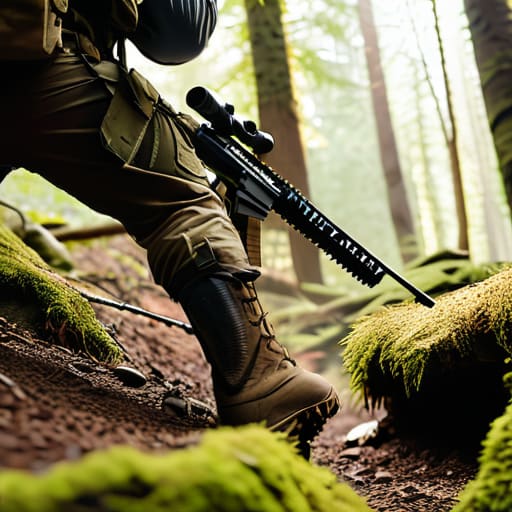
Most folks think moving while shooting is all about footwork and speed, but they forget that every step you take is a vibration that fights your ability to stay on target. When you’re stationary, you can lean into the gun and let your bones do the work. Once you start moving, your center of gravity is constantly shifting, and that’s when recoil management on the move becomes a real headache. If you try to fight the rifle with just your arms while your legs are busy navigating uneven ground, you’re going to end up fighting yourself more than the firearm.
The trick isn’t to hold on tighter; it’s to integrate the gun into your natural rhythm. I’ve seen plenty of shooters try to “muscle” the weapon during dynamic shooting techniques, only to find their muzzle climbing toward the sky with every single shot. You have to learn to let the rifle move with your body, maintaining a consistent cheek weld even as your hips sway. If you don’t find that balance between tension and fluidity, you’ll spend more time recovering your sight picture than actually hitting anything.
Five Habits to Keep Your Discipline When Your Feet Start Moving
- Watch your muzzle direction like it’s your own shadow; the second you start walking, your natural tendency is to let that barrel drift toward the ground or, worse, toward a bystander. Keep that muzzle indexed where it belongs, even when your stride breaks your rhythm.
- Shorten your steps to keep your platform stable; if you try to take long, aggressive strides while trying to track a target, you’re going to end up fighting your own momentum instead of managing your recoil. Small, deliberate steps keep your center of gravity where it needs to be.
- Don’t let your eyes get lazy; most people focus so hard on the target they forget to scan their surroundings, and that’s when you trip over a stump or walk into a hazard. You need to maintain situational awareness even when you’re working through a transition.
- Practice your transitions while stationary before you ever try to move; if you haven’t mastered the mechanics of shifting your weight and sight picture while standing still, adding footwork into the mix is just asking for a mistake.
- Keep your grip pressure consistent through the movement; it’s easy to let your hands get loose when you’re focusing on your footing, but a loose grip on a moving platform is a recipe for erratic shots and wasted brass.
The Three Non-Negotiables of Moving with a Loaded Gun
Your feet might be busy, but your muzzle shouldn’t be; if you can’t maintain muzzle awareness while changing your stride, you aren’t ready to move yet.
Don’t let your eyes get ahead of your weapon, because if you lose sight of where that barrel is pointing during a transition, you’ve already lost control of the situation.
Treat every step like it’s part of a deliberate procedure, not a frantic scramble, because momentum is easy to gain but discipline is a hell of a lot harder to recover once you’ve let it slip.
Bringing the Discipline Home

At the end of the day, shooting on the move isn’t about looking like a character in a movie; it’s about the unglamorous math of body mechanics and recoil management. You’ve got to master your footwork so you aren’t stumbling, keep your center of gravity low, and ensure your muzzle stays disciplined even when your heart rate starts climbing. If you ignore the foundation—the way you plant your feet or how you manage that transition of weight—you aren’t actually shooting, you’re just moving with a firearm. It’s a lot of small, repetitive adjustments that feel tedious in practice, but they are the only things that keep your shots on target when the environment gets chaotic.
I’ve stood on the line long enough to see plenty of folks try to rush the process, and they usually end up with nothing but bruised egos and wasted brass. Don’t be in such a hurry to get to the “action” that you forget the fundamental habits that keep you safe and effective. Take it slow, drill the basics until they are boring, and respect the mechanics of your own body. When you finally get to the point where movement feels like second nature, you’ll realize that the best shooters aren’t the ones doing the most flashy maneuvers; they are the ones who stayed disciplined when it mattered most.
Frequently Asked Questions
How do I keep my muzzle pointed in a safe direction when I'm turning a corner or changing my path of travel?
The mistake most folks make is thinking their eyes lead the gun. They don’t. Your feet and your hips lead. When you turn a corner, don’t just pivot your wrists; move your entire torso as one unit. If you try to “whip” the muzzle around with just your arms, you’ll inevitably sweep something you shouldn’t. Turn your body first, keep that muzzle indexed to your path, and let the movement come from your core.
Is there a specific way to transition from a walking pace to a shooting stance without losing my balance or my sight picture?
You’re looking for that sweet spot between a stroll and a statue. The mistake I see most is trying to stop dead. If you snap your feet into a stance like you’ve hit a wall, your upper body is going to wobble, and your sight picture will follow. Instead, think of it as a deceleration. Shorten your stride, lower your center of gravity, and let your feet find their marks before you try to drive that sight onto the target.
How much does the weight of my gear and the length of my barrel affect how I should step to keep my movement smooth?
Weight and length change your center of gravity, and that’s where people get sloppy. If you’re lugging a heavy kit or a long-barreled rifle, you can’t just walk; you have to compensate for that momentum. A longer barrel wants to swing wide, so you need shorter, more deliberate steps to keep your muzzle path controlled. Don’t try to rush it. Lower your center, shorten your stride, and let the gear dictate your pace, not your ego.




