I’ve spent twenty years watching folks stand on my line, and if there’s one thing I’ve learned, it’s that most people approach gear like they’re shopping for a high-end watch instead of a tool. You’ll see shooters spending three months researching lumen counts, battery life, and proprietary mounting systems, thinking they’re finding the “perfect” setup. But let me tell you, most of that flashy marketing is just noise designed to separate you from your paycheck. When it comes to learning how to choose a reflex sight for a pistol, you shouldn’t be looking for the most expensive piece of glass on the shelf; you should be looking for the one that actually stays zeroed when you’re working through a high-stress drill.
I’m not here to sell you on a brand or a lifestyle. My goal is to strip away the nonsense and talk about the practicalities: field of view, housing durability, and how much of that dot you can actually see when your heart rate climbs. I’m going to give you the unvarnished truth based on what I see on the range every Saturday morning. We’re going to focus on the mechanics and the reliability, because at the end of the day, the best optic is the one that works every single time you draw.
Dot Size and Clarity Seeing What Actually Matters
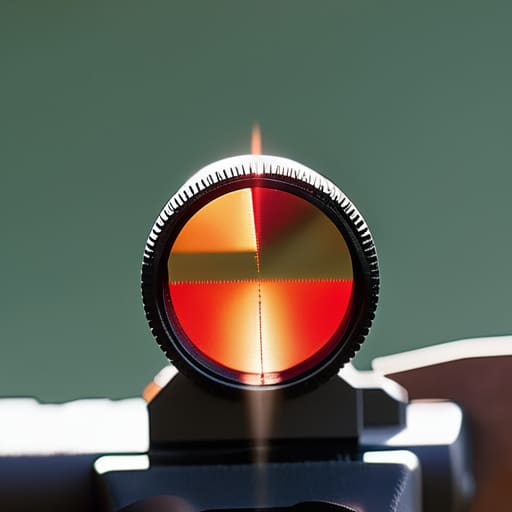
When you’re staring down a target, you aren’t thinking about the math behind the lens; you’re thinking about whether you can actually see the point of light. A massive dot is easy to find, which is great for a quick defensive draw, but it can also obscure the very target you’re trying to hit. On the flip side, a tiny, crisp dot is a dream for precision, but it can feel like you’re hunting for a needle in a haystack when your heart rate is up. You have to find that middle ground where dot size and clarity work for your eye, not against it.
I’ve seen plenty of shooters get tripped up by what I call the “ghost dot”—a light that looks bright but shifts whenever you move your head slightly. That’s usually a sign of significant parallax error in reflex sights, and it’ll ruin your grouping faster than a bad grip. You want an optic that stays true to the center, regardless of how much you’re moving. If the dot jumps around every time you take a breath, it isn’t an optic you can trust when the checks matter most.
The Hidden Trap of Parallax Error in Reflex Sights
Most folks head to the range, slap a new optic on their slide, and assume they’re good to go. But there is a subtle way to fail before you even pull the trigger, and it usually comes down to parallax error in reflex sights. In a perfect world, that little red dot stays glued to your target regardless of how your eye moves. In the real world, if the optic isn’t built well, moving your head just a fraction of an inch will make the dot appear to “float” or shift away from your actual point of aim.
I’ve seen plenty of shooters get frustrated because their groups look wide, even though their fundamentals are solid. They aren’t pulling the gun off target; they’re chasing a dot that is lying to them. If you are looking at optics for concealed carry, this becomes even more critical. When you’re under stress or drawing from a holster, you won’t have the luxury of a perfect, centered eye alignment. You need a sight that stays true even when your presentation is a little messy. Don’t let a cheap lens turn a good shot into a miss.
Five Things to Check Before You Commit to an Optic
- Don’t get blinded by the brightness settings. A sight that’s too bright in the midday sun is a headache, but a sight that can’t compete with the glare is a liability. Make sure you can actually see that dot when you’re out on the range in July.
- Check the footprint and the housing. I’ve seen too many folks buy a beautiful optic only to realize it’s too wide for their slide or makes the gun feel like a brick in their hand. It needs to feel like a part of the pistol, not an afterthought.
- Look at the battery access. If you have to strip the whole gun or take the optic off just to swap a CR2032, you aren’t going to do it as often as you should. I want something where I can check the power without making a whole production out of it.
- Test the mounting security. A sight is useless if it’s walking off the plate after fifty rounds. Look for robust mounting systems—screw-down plates are my preference over anything that feels like it’s held on by hope and a prayer.
- Consider the “eye box.” You don’t want an optic that requires you to have your head positioned perfectly like a surgeon just to see the dot. If your alignment is off by a fraction of an inch and the dot disappears, that’s a sight you can’t trust when things get moving.
The Bottom Line on Your Next Optic
Don’t get blinded by the fancy features or the newest coatings; if the dot isn’t clear and the glass doesn’t hold a zero under real-world use, it’s just an expensive paperweight on your slide.
Pay attention to how the sight handles parallax, because a dot that shifts every time your eye moves a fraction of an inch will make you fight the gun instead of shooting it.
Choose a sight that fits your specific shooting style—whether that’s a crisp, small dot for precision or a larger, more forgiving one for quick transitions—and stick to what works when the pressure is on.
Making the Final Call
At the end of the day, choosing an optic isn’t about finding the most expensive piece of glass in the shop; it’s about finding the one that works with your eyes and your habits. You’ve looked at the dot size, you’ve considered how much parallax error you can live with, and you’ve weighed the trade-offs between battery life and brightness. Don’t let the specs on a spreadsheet bully you into a decision. If a sight feels awkward in your hand or the window feels too small for your natural target acquisition, it doesn’t matter how many features it has—it’s the wrong tool for you. Focus on reliability and consistency over flashy marketing, because the best optic is the one that stays zeroed when you actually need to use it.
I’ve spent twenty years watching people chase the latest trends, only to realize they bought something that didn’t suit their way of shooting. My advice is to keep it simple: pick a sight you can trust, learn its quirks inside and out, and then get back to the work of being a better shooter. An optic is just a tool, and like any tool in a machine shop, it only performs as well as the person operating it. Get your fundamentals right, maintain your gear, and trust your training more than the hardware. The glass might help you see the target, but your habits are what will actually hit it.
Frequently Asked Questions
How much does battery life actually matter if I'm checking my gear every week?
If you’re checking your gear every week, you aren’t going to run dry mid-drill, but that’s not the point. Battery life isn’t just about staying powered; it’s about reliability. I’ve seen guys pull a red dot off a shelf, slap a fresh battery in, and head to the line only to find a slow flicker or a dim dot because the contact was poor. Check your electronics, sure, but check the integrity of the housing too.
Is a larger dot really going to help me under stress, or is it just going to make my accuracy worse?
It’s a trade-off, plain and simple. A larger dot is easier to find when your heart is hammering and your hands are shaking—it’s a bigger target for your eyes to grab onto. But that extra size can mask a sloppy sight picture. If you’re aiming for precision, a smaller dot gives you more definition. For me, if you’re working under stress, go larger. You can’t shoot what you can’t find.
Should I be looking for something rugged enough for a holster, or is that just marketing fluff?
It isn’t marketing fluff. If you’re carrying that pistol on your hip, that optic is going to take a beating. It’ll bump against your steering column, your belt, and maybe even a door frame. I’ve seen plenty of cheap glass lose their zero just from a hard walk. You want something with a housing that won’t flex and mounting screws that actually stay tight. If it isn’t built for the holster, it isn’t reliable.




