
I’ve watched plenty of shooters spend three grand on a precision rifle and a high-end optic, only to spend their entire Saturday morning cursing a “bad zero” that wasn’t actually the rifle’s fault. Most people think if they click their turrets and the group moves, they’re good to go, but that’s a dangerous assumption to make when you’re finally sitting in the chair. The truth is, knowing how to test tracking on a scope isn’t about luck or having a steady hand; it’s about verifying that every single click on that dial is actually moving the point of impact exactly where it’s supposed to. If your tracking is off by even a hair, you aren’t shooting a precision rifle anymore—you’re just guessing.
In this guide, I’m going to walk you through the slow, methodical process of verifying your optic’s mechanical integrity. We aren’t going to rely on “feeling” like the shots are hitting the mark; we are going to use a repeatable, step-by-step method to prove it. I’ll show you how to set up a controlled test to confirm your adjustments are consistent, so you can stop wondering if your gear is lying to you and start trusting your data when it actually matters.
Guide Overview
Tools & Supplies
- Target or paper (to mark impact points)
- Pencil or fine-tip marker (to record data)
- Notebook (to track turret clicks)
- Rifle and ammunition (to perform live fire)
- Cleaning kit (to ensure clear optics)
Step-by-Step Instructions
- 1. First, you need a clean, level bench and a way to keep your rifle from sliding around while you’re working. I always use a dedicated shooting rest or a heavy-duty sandbag setup; if the rifle is moving even a hair while you’re clicking those dials, you’re going to get a false reading and waste your whole afternoon.
- 2. Set your rifle up and get a solid zero on a target at a known distance—let’s say 50 or 100 yards. Once you’ve got that group tight, take a fine-tip marker and mark your starting point on the turret caps. You need to know exactly where “zero” is relative to the physical markings on the dial so you aren’t guessing later.
- 3. Now, pick a direction—usually elevation—and start dialing. I like to go in increments of 10 MOA or whatever your specific scope’s increments allow. Click it up, then physically verify that the internal adjustment is moving by watching the reticle shift in the glass. It sounds simple, but you’d be surprised how many people click a turret that’s actually seized or stuck.
- 4. Once you’ve dialed out a significant amount—say, 20 or 30 MOA—it’s time to bring it all the way back. This is the part where most people get lazy, but you have to dial it back to your original starting point. You’re looking for the reticle to land exactly where it began; if it’s off, you’ve got a mechanical issue in the adjustment assembly.
- 5. After you’ve done the “up and back” test, repeat the exact same process for your windage. Just like the elevation, you want to see if the turret can travel the full range of its advertised movement and return to center without any binding or sudden jumps in the movement.
- 6. The final step is the most important: the actual shot test. Take a few rounds and shoot at your original zero, then dial in a specific correction—say, 10 MOA up—and shoot again. If your group lands where the math says it should, your tracking is sound. If it doesn’t, you’ve got a tracking error that needs to be addressed before you ever take that rifle into the field.
Verifying Optical Turret Click Consistency Through Repetition
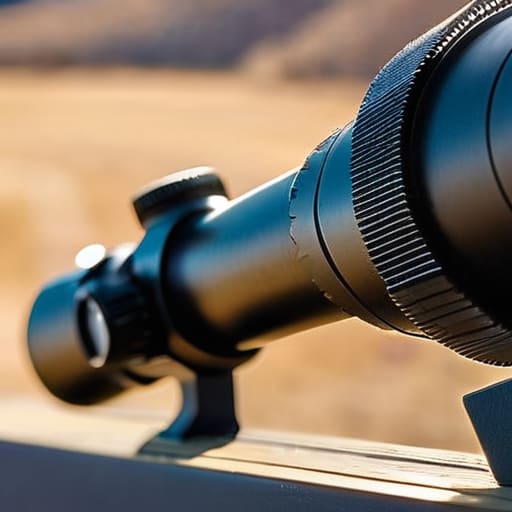
Once you’ve done your initial movements, you can’t just take the first result at face value. I’ve seen plenty of shooters assume their glass is dialed in because they hit one target, only to find out their adjustments are inconsistent once the wind picks up or the temperature drops. To really get a handle on your optical turret click consistency, you need to repeat the process. I like to dial a set number of clicks in one direction, verify the impact, and then dial it all the way back to center before repeating the cycle in the opposite direction. If you aren’t seeing the same point of impact both ways, you don’t have a tracking problem; you have a mechanical one.
It’s a tedious bit of work, but verifying your riflescope turret adjustment accuracy through repetition is the only way to be sure. If the clicks feel mushy or if the impact doesn’t return to the original zero after a full cycle, you might have a loose turret cap or internal movement. Don’t rush this. Take the time to do the math and confirm that every single click is moving that reticle exactly where it’s supposed to go.
The Mechanical Turret Movement Test You Cant Skip
Now, once you’ve confirmed that the clicks feel even, you need to move past the tactile sensation and actually check the mechanical integrity. I’ve seen plenty of folks assume that because a turret clicks, it’s working, but a loose internal component can make those clicks deceptive. Before you start testing scope windage and elevation on a live target, I want you to sit at your bench and perform a manual sweep. Take your turret, dial it a set number of clicks—say, twenty—and then dial it all the way back to zero. If you don’t land exactly where you started, you don’t have a tracking problem; you have a mechanical failure in the turret assembly.
While you’re doing this, pay close attention to the resistance. It shouldn’t feel “mushy” or catch on certain increments. If you feel a hitch, you might have debris in the threads or a spring that’s lost its tension. This mechanical turret movement test is about catching those tiny irregularities at the bench rather than discovering them when you’re halfway through a precision group at the range. Getting this right is the difference between a tool you can trust and a piece of glass that’s just guessing.
A few things to keep in mind while you're clicking through the dials
- Don’t rush the process. If you’re just spinning the turrets as fast as you can to get back to shooting, you’re going to miss a mechanical hiccup. Slow down and actually feel every click.
- Keep a notebook handy. I don’t care if you think you have a memory like an elephant; write down your starting zero and your click counts. You need hard numbers to see if that tracking is actually holding up.
- Watch out for the “click fatigue.” After twenty minutes of testing, your brain starts to tune out the sound of the turrets. Take a break, grab some water, and come back to it with fresh ears.
- Check your mounting screws while you’re at it. There’s no point in proving your scope tracks perfectly if your rings are slightly loose and your zero is walking every time the rifle recoils.
- Do this in a controlled environment. Don’t try to verify your tracking in the middle of a high-stakes competition or a windy afternoon in the field. Do it on a steady bench where you can actually focus on the mechanics.
The bottom line on scope reliability
Don’t trust a single click; you need to dial it out and back several times to make sure the internal mechanics aren’t just “close enough,” but actually consistent.
A scope that looks pretty on the rifle is useless if the turrets don’t move smoothly, so check that mechanical feel before you ever trust it for a long-range shot.
Testing your tracking is tedious work, but it’s a lot better to find a mechanical flaw on your workbench than to find it when you’re staring at a missed target at three hundred yards.
Getting it Right Before the Shot
At the end of the day, testing your tracking isn’t about being a perfectionist; it’s about removing the variables that lead to frustration. You’ve checked the mechanical movement of the turrets, you’ve run the repetitive click tests to ensure the internal springs aren’t sticking, and you’ve verified that your adjustments actually move the point of impact where they should. It is a tedious process, and frankly, most people skip it because they just want to get to the shooting part. But if you don’t take the time to verify your zero and the mechanical integrity of those dials now, you’re going to spend your entire session second-guessing your math instead of focusing on your fundamentals.
I’ve spent twenty years on the range line, and I can tell you that the most confident shooters aren’t the ones with the most expensive glass; they are the ones who trust their equipment. There is a specific kind of peace that comes with knowing exactly what your rifle will do when you click that dial. When you do the unglamorous work of maintenance and verification, you aren’t just cleaning a tool—you are building a reliable system. Do the checks, respect the mechanics, and once you’ve confirmed everything is dialed in, you can finally stop worrying about the gear and just enjoy the sport.
Frequently Asked Questions
If I find that my clicks aren't consistent during the mechanical test, is the scope actually broken, or is it just a matter of needing a more thorough cleaning?
It depends. If you’ve got grit or old oil gunked up in the turret cap, a good cleaning and some fresh, high-quality lube might do the trick. But if you’re feeling a physical “crunch” or a click that feels hollow compared to the others, that’s usually a sign of internal mechanical failure—likely a damaged spring or a stripped adjustment screw. Don’t try to force it; if cleaning doesn’t fix it, the glass is compromised.
How much distance do I really need to be shooting at to get a reliable reading on whether my tracking is holding true?
If you’re just shooting at twenty yards, you’re playing pretend. You won’t see the actual deviation caused by a loose turret or a bad internal adjustment. I tell people to get out to at least a hundred, but ideally, you want to be at a distance where your zero is actually being challenged. If you’re dialing for wind or elevation, you need enough distance for those clicks to actually move the point of impact.
Is there a point where I should stop trying to fix a tracking issue myself and just admit the optic is a lost cause and needs to go back to the manufacturer?
Look, I’ve spent enough time at a workbench to know when a tool is fighting you. If you’ve verified the tracking is inconsistent across multiple sessions and you’ve ruled out your mounts or your ammunition, stop. Don’t keep chasing your tail trying to “fix” internal mechanics you weren’t meant to touch. If the clicks aren’t holding, the internal erector tube is likely compromised. At that point, pack it up and send it back.




