I’ve watched guys spend three thousand dollars on a glass setup only to spend their entire Saturday afternoon squinting at a blurry, dancing smudge on a steel target. It’s a common sight on my line: a shooter buys the most expensive optics money can buy, sets them up on a wobbly folding chair, and wonders why they can’t see their own grouping. Most of the manuals online make it sound like some complex science experiment, but the truth is that learning how to use a spotting scope at the range isn’t about the price tag on the lens; it’s about the discipline of the setup.
I’m not here to sell you on high-end glass or some fancy technical jargon that won’t help you hit a dime at three hundred yards. What I want to do is show you the unglamorous, practical side of observation—the stuff like tripod stability, eye relief, and why your lighting matters more than your magnification. I’m going to walk you through the steady, repeatable habits that turn a piece of expensive hardware into a reliable tool. If you get the foundation right, you’ll actually see what your rifle is doing instead of just guessing.
Mastering Spotting Scope Tripod Stability and Rigidity
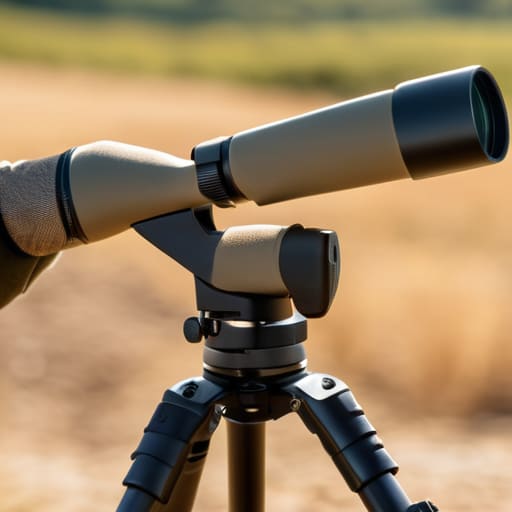
I’ve seen plenty of shooters spend thousands on a precision rifle only to have their results ruined by a tripod that shakes like a leaf in a breeze. If your base isn’t solid, your glass is useless. You can’t expect to be identifying bullet impact locations at five hundred yards if your setup is wobbling every time a heavy gust hits or you even breathe near the adjustment knobs. I always tell the new folks: don’t just throw your scope on the bench and hope for the best. Get your tripod legs locked down tight, and if you’re shooting on soft ground, get some sandbags or weight on those center columns.
Rigidity isn’t just about preventing movement; it’s about consistency. When you’re working with high optical magnification for target observation, even a microscopic shimmy becomes a violent earthquake through the lens. I make it a habit to check my leg locks twice—once when I set them, and again after I’ve adjusted the height. If you’re serious about long range precision shooting tips, you need to treat your spotting scope setup with the same respect you give your rifle’s torque settings. Stability is the foundation; everything else is just optics.
Finding Your Sweet Spot Spotting Scope Eye Relief and Focus
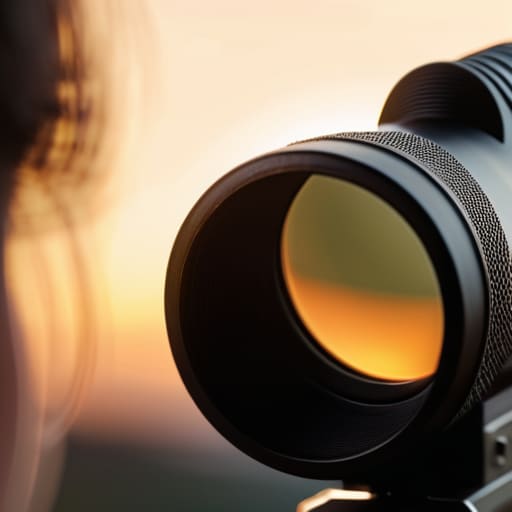
Once you’ve got your tripod locked down and steady, you have to deal with the part that actually affects your eyes: the interface between you and the glass. I’ve seen plenty of folks squinting and leaning in way too close, trying to force an image that isn’t there. You need to find your spotting scope eye relief and focus before you even think about looking for a target. If your eye is too close, you’ll lose the field of view; too far, and you’re just staring at a dark ring. Take your time to adjust the diopter until the reticle is sharp, then back off until the image feels natural.
It’s a procedural thing. You don’t just crank the magnification to the max and hope for the best. Start at your lowest power to get a sense of the landscape and identify bullet impact locations clearly. Once you have the context, you can dial in the optical magnification for target observation to see the fine details, like whether you’re looking at a clean hole or just a bit of disturbed dirt. Do it in stages, or you’ll spend more time hunting for the target than actually shooting.
The Details That Separate Precision from Guesswork
- Watch your lens cleanliness like it’s your paycheck. I’ve seen guys try to squint through a layer of fine dust and silica, thinking they’re seeing a “haze” on the target when really they’re just looking at a dirty piece of glass. Keep a dedicated lens pen and a microfiber cloth in a sealed bag, and never, ever use your shirt to wipe a lens.
- Learn the rhythm of your breathing before you commit to the glass. If you’re huffing and puffing from a long hike or a heavy load, your view is going to dance like a leaf in a gale. Settle your lungs, find a steady exhale, and wait for that moment of stillness before you try to dial in your magnification.
- Don’t fight the light. If the sun is hitting your objective lens dead-on, you’re going to deal with glare that makes a 100-yard target look like a smudge. Position yourself or your tripod so you aren’t staring directly into the glare, and if you’re serious about it, get used to using a lens hood to keep the shadows where they belong.
- Master the fine-adjustment knobs instead of cranking the big ones. I see too many shooters grab the main focus dial and spin it like they’re trying to start a lawnmower. It’s too aggressive. Use the slow, incremental movements. Precision is found in the micro-adjustments, not the heavy-handed turns.
- Keep your eyes calibrated. If you’ve been staring through high-power magnification for twenty minutes, your eyes are going to get lazy. Every so often, pull back to a lower power or look at something in the distance without the scope. It keeps your eye from “locking in” to a distorted view and helps you maintain a better sense of depth and clarity.
The Bottom Line on Clear Sightlines
Stability is your foundation; if your tripod is wobbly or your legs are braced poorly, all the glass in the world won’t help you find that center mass.
Don’t fight your equipment; adjust your eye relief and focus settings until the image feels natural, rather than straining your neck to meet a fixed position.
Treat your optics like your rifles—keep the lenses clean and the mounting hardware tight, because a dirty lens or a loose screw is just another way to miss a shot you should have made.
The Discipline of the View
At the end of the day, a spotting scope isn’t just a piece of glass you look through; it is an extension of your ability to read the range. If you haven’t taken the time to ensure your tripod is locked down on stable ground, or if you’re fighting against poor eye relief, you aren’t actually seeing your shots—you’re just guessing. Precision comes from the details you manage before you ever look through the lens. Remember that stability and focus aren’t “extra” steps; they are the foundation of everything else you do out here. If the setup is sloppy, the data you get back from your target will be sloppy, too.
I’ve spent twenty years watching people rush through their setup just so they can get to the fun part, but the truth is that the real skill lies in the preparation. When you treat your equipment with respect and commit to these small, unglamorous habits, you stop fighting your gear and start mastering your craft. It might feel tedious when you’re standing in the wind or the heat, but consistency is what separates a hobbyist from a marksman. Get the setup right every single time, and the shooting will take care of itself.
Frequently Asked Questions
Is there a way to tell if my scope is actually out of focus or if I'm just dealing with heat shimmer coming off the dirt?
That’s the million-dollar question on a hot afternoon. Here is how I handle it: find a fixed, high-contrast object—a distant fence post or a rock—and try to focus on it. If the edges of that object are dancing or blurring even when you’ve dialed the focus knob to its limit, you’re looking at heat shimmer. If the image stays soft regardless of the adjustment, your optics are likely the culprit.
How often should I be cleaning my lenses out at the range without risking a scratch?
Look, don’t go reaching for your shirt tail to wipe a lens. That’s how you end up with micro-scratches that turn your high-end glass into a blurry mess. If you see dust or a smudge, wait until you’re back at the bench or use a dedicated air blower first. Only use a clean microfiber or a lens pen when you absolutely have to. If it isn’t obstructing your view, just leave it be.
When am I actually going to see a difference between a decent entry-level scope and one of those high-end glass setups?
You’ll see it the moment the light starts to fail or the distance gets serious. An entry-level scope works fine on a bright Tuesday morning, but once you’re chasing long-range steel in the late afternoon haze, that’s when the cheap glass quits on you. High-end glass holds the contrast and cuts through the shimmer. If you want to actually see the impact instead of just a blurry smudge of grey, you eventually have to pay for the clarity.




