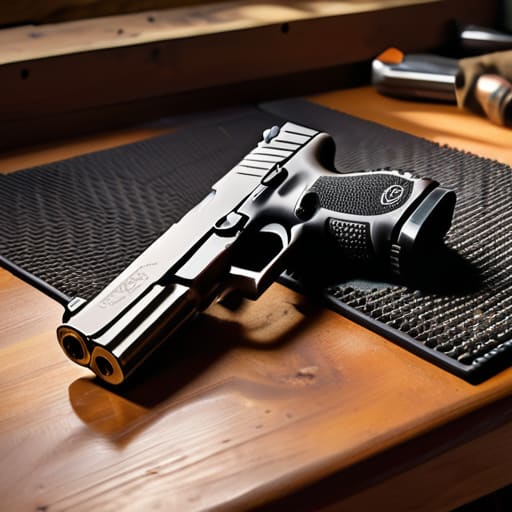
I spent twenty years watching people treat their gear like it was indestructible, only to see a beautiful old receiver get gouged because they decided to clean it on a bare wooden workbench or a cheap piece of felt. Most folks think they need to spend eighty bucks on some tactical, laser-etched neoprene pad to protect their investment, but that’s just marketing fluff. When you’re actually learning how to choose a gun mat, you shouldn’t be looking at the brand name or the fancy patterns; you should be looking at whether that surface is going to slide across your table the second you apply pressure to a cleaning rod.
I’m not here to sell you on the latest gear craze or tell you that a specific color will make you a better shot. What I want to do is walk you through the practical, unglamorous reality of what actually works in a real workshop. I’ll show you how to spot the difference between a surface that stays put and one that becomes a hazard, and why the material density matters more than anything else. We’re going to get the fundamentals right so your maintenance stays organized and your tools stay safe.
Finding a Chemical Resistant Work Surface That Lasts
When you’re stripping down a bolt action or deep-cleaning a semi-auto, you aren’t just playing with water and soap. You’re dealing with solvents, CLP, and heavy oils that can eat through a cheap piece of fabric or a thin sheet of plastic in a single afternoon. If your mat starts to swell, peel, or turn gummy after one session, it’s useless. You need a chemical resistant work surface that won’t react when you spill a little Hoppe’s or a heavy-duty degreaser. I’ve seen too many folks use a kitchen towel or a thin desk mat, only to find the solvent has seeped through and ruined the finish on their wooden workbench underneath.
It isn’t just about the chemistry, though; it’s about the integrity of your workspace. A good mat provides essential non-slip workbench protection, keeping your tools from sliding into the cracks or, worse, having a small part roll off the edge and vanish into the floorboards. I always tell my students to look for something with enough weight and texture to stay put while you’re working. If the mat moves every time you apply pressure to a punch or a screwdriver, you’re going to end up frustrated and potentially damaging your gear.
Why Large Format Cleaning Mats Prevent Lost Parts
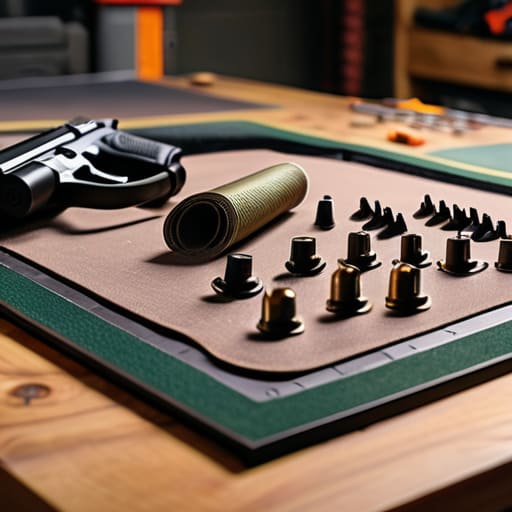
I’ve spent enough Saturdays on the range to know that a mistake isn’t always a missed shot; sometimes, it’s a tiny spring or a firing pin that decides to take a walk across the garage floor. When you’re working on a small-frame bolt action or stripping a handgun, those tiny components are easy to lose if you’re working directly on a wooden workbench or a cluttered desk. This is where large format cleaning mats become more than just a luxury. They provide a dedicated, contained zone that acts as a visual boundary for your parts.
If you try to field-strip a piece on a standard table, you’re essentially playing a high-stakes game of hide-and-seek with your own hardware. A decent mat provides a consistent texture that catches those small, rolling pieces before they hit the cracks in the floor. When you invest in a proper gun cleaning station setup, you aren’t just protecting your furniture; you’re creating a controlled environment where every pin, detent, and spring has a place to land. It keeps the frustration of a lost part from ruining a perfectly good afternoon of maintenance.
Five Things to Look for Before You Lay It Down
- Check the thickness, not just the look. You want something with enough density to cushion a dropped punch or a small screw, but not so thick that it feels like you’re working on a mattress. A little bit of give is good for your elbows, but it shouldn’t swallow your tools.
- Look for a non-slip backing that actually works. I’ve seen too many guys trying to field strip a sidearm on a mat that slides across the workbench every time they apply pressure to a spring. If the mat moves, your hands move, and that’s when things go sideways.
- Test the edges. A cheap mat with fraying edges or a thin perimeter is just a magnet for catching your tools or, worse, snagging a piece of a disassembled action. You want clean, reinforced edges that stay flat against the table.
- Make sure it’s easy to clean without a chemistry degree. If you spill CLP or Hoppe’s on it, you shouldn’t have to throw the whole mat in the trash. A good mat should take a wipe-down and be ready for the next session without leaving a greasy residue behind.
- Consider the scale of your work. If you’re mostly working on handguns, a small pad is fine, but if you’re doing full-length cleaning on a bolt action or a service rifle, you’re going to run out of room fast. Buy a mat that fits the biggest project you plan on tackling.
The Bottom Line on Your Bench Setup
Don’t settle for a mat that acts like a sponge; if it soaks up solvent and oil, you’re just making a mess that’ll ruin your table and your workspace.
Size matters because a small mat is just a fancy way to lose a firing pin or a tiny spring into the carpet.
Get a surface that stays put, because the last thing you need when you’re deep in a detail strip is your workspace sliding toward the edge of the bench.
Setting the Foundation
At the end of the day, choosing a mat isn’t about buying the most expensive piece of gear in the catalog; it’s about making sure your workspace actually works for you. You need something that won’t melt when you spill a little solvent, and enough room so that a tiny firing pin doesn’t vanish into the carpet the moment you drop it. If you get the surface right and the size right, you’ve already eliminated half the frustrations that lead to sloppy work. Remember, a good mat is about control and visibility, ensuring that every part stays exactly where you put it.
I’ve spent twenty years watching folks rush through their maintenance, and I can tell you that the best shooters are the ones who respect the process. Taking care of your tools is just as much a part of the discipline as your trigger squeeze or your stance on the line. When you invest a little time into setting up a proper, dedicated station, you aren’t just organizing a hobby—you are building a habit of precision. Get your workspace dialed in, treat your equipment with the respect it deserves, and the shooting will take care of itself.
Frequently Asked Questions
Is a heavy rubber mat better than a fabric one if I'm working with a lot of CLP and solvents?
If you’re working with heavy amounts of CLP or harsh solvents, go with the heavy rubber. Fabric mats are fine for a quick wipe-down, but they act like a sponge. Once that solvent gets into the fibers, it’s stuck there, making a mess of your workbench and eventually smelling like a chemical plant. A thick rubber mat lets you wipe the excess right off and keeps your workspace clean and dry.
How much space do I actually need for a mat before I start feeling cramped and losing parts?
I’ve seen guys try to clean a semi-auto on a mat the size of a dinner plate, and it always ends with a spring rolling under the workbench. You want enough room to lay the whole firearm down flat without the muzzle or the stock hanging off the edge. For most, that means at least 24 by 18 inches. If you can’t move your tools around the gun without bumping them into the action, you’re too small.
Can I just use a piece of plywood or a workbench, or is a dedicated mat really worth the extra cost?
You can, but you shouldn’t. A workbench is fine for heavy work, but a bare surface is a magnet for lost springs and tiny pins. If you use plywood, you’re just inviting oil to soak into the grain and making a mess that’s a bear to clean up. A dedicated mat gives you a clean, non-slip workspace that catches the small stuff before it hits the floor. It’s about making the job easier and more controlled.




