I’ve stood on the line for twenty years, and if there’s one thing I’ve learned, it’s that people love to overcomplicate things that should be simple. I see folks walking into shops acting like they’re asking for a miracle, or worse, they think they can just hand over a piece of steel and walk away without saying a word. There is a massive difference between a guy who just wipes down a barrel and a real professional who knows how to look for the invisible failures waiting to happen. If you don’t know exactly how to get a firearm inspected by a gunsmith in a way that actually provides value, you’re basically just paying someone to look at your hobby.
I’m not here to give you a sales pitch or a list of fancy tools you don’t need. I want to talk about the practical side of this: what to ask, what to look for, and how to make sure you aren’t being taken for a ride. We’re going to walk through the straightforward process of prepping your gear and communicating with the pro, so you can stop guessing and start trusting your equipment again.
The Real Value of Professional Gunsmith Services
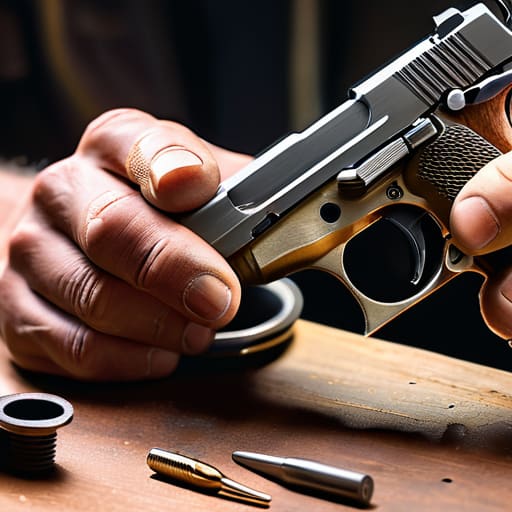
Most folks think a gunsmith is just someone you call when a part snaps or a spring loses its tension. But if you’re only using professional gunsmith services when something is already broken, you’re playing catch-up. The real value lies in what they find before the hammer ever falls. A seasoned smith isn’t just looking for cracks; they are performing a deep dive into identifying firearm defects that a standard cleaning kit simply won’t touch. They see the microscopic wear on a sear or a slight misalignment in a barrel that tells them a malfunction is coming long before it actually happens.
I’ve seen too many shooters rely on a quick wipe-down and call it a day, thinking they’ve done their part. They haven’t. A proper professional inspection includes a rigorous set of firearm safety check procedures that go way beyond the basics of your home workbench. They are looking at the mechanical integrity of the entire system. Think of it like an oil change for a truck—you don’t wait for the engine to seize before you check the fluids. You do it so the machine stays predictable. And in this sport, predictability is everything.
Moving Beyond Basics With Preventative Firearm Maintenance
Most folks think maintenance is just a bottle of CLP and a clean rag, but that’s only scratching the surface. Real preventative firearm maintenance is about looking for the things that aren’t immediately obvious—the microscopic cracks in a receiver or a spring that’s lost just enough tension to cause a light primer strike. When I’m working on an old bolt action, I’m not just looking for rust; I’m looking for the subtle signs of metal fatigue that tell me a part is about to fail. You can clean a gun until it shines, but you can’t clean away a structural defect.
That’s where a professional comes in. A gunsmith doesn’t just wipe things down; they run through a rigorous gunsmith inspection checklist that covers everything from headspace to extractor tension. They have the tools to see what your eyes can’t. Relying on a professional to handle these deeper checks means you aren’t just maintaining a tool—you are investing in your own peace of mind on the range. It’s much easier to schedule a checkup on a Tuesday than it is to explain a malfunction to a range officer on a Saturday.
How to Walk into a Shop Without Wasting Your Time
- Clean your own gear before you hand it over. I don’t care if you’re paying for a full service, but don’t hand a smith a rifle caked in carbon and CLP just so they can spend half their labor time scrubbing off your mess instead of actually inspecting the internals.
- Know exactly what’s bothering you. “It feels weird” isn’t a diagnostic tool. Tell them if the trigger pull is gritty, if the extraction is sluggish, or if there’s a specific click that shouldn’t be there. Give them a symptom, not a riddle.
- Bring your documentation and any specific parts you’ve swapped in. If you’ve put an aftermarket trigger or a custom barrel on a bolt action, the smith needs to know that’s not factory spec before they start looking for “problems” that are actually just your custom setup.
- Ask for a written estimate before they crack the action open. A good smith will tell you what they see, but you need to know the ceiling on the cost. You don’t want to find out a simple inspection turned into a three-hundred-dollar overhaul without a heads-up.
- Don’t be afraid to ask “why.” If they tell you a sear is worn or a spring is fatigued, ask them to show you. You aren’t just paying for a fix; you’re paying for the knowledge of what’s happening inside your tool. If they can’t explain it, find a different shop.
The Bottom Line on Professional Inspection
Stop treating a gunsmith like an emergency room; use them as a preventative measure to catch the small cracks and worn springs before they become a safety hazard on the range.
Know your limits—if a repair involves more than just cleaning and basic parts replacement, hand it to a professional instead of trying to “fix” it with a screwdriver and a prayer.
A professional inspection isn’t just about making the gun work; it’s about ensuring the mechanical habits of your firearm are as reliable as your own.
Making the Call
At the end of the day, getting a professional inspection isn’t about admitting you don’t know how to clean your own gear. It’s about recognizing the difference between a surface wipe-down and a deep mechanical assessment. You can scrub the bolt carrier group until it shines, but you can’t see a hairline fracture in a receiver or a worn-out sear spring just by looking at it under a shop light. Whether you are dealing with a vintage bolt action that needs some serious love or a modern service rifle that’s seen too many dusty range days, don’t leave the mechanical integrity to chance. A good gunsmith provides the one thing we all need on the line: certainty that the machine will do exactly what it is supposed to do.
I’ve spent twenty years watching people treat their firearms like tools they can just ignore until they break. But in this sport, a tool that breaks at the wrong moment isn’t just an inconvenience; it’s a safety hazard. Taking your equipment to a professional is an investment in your own discipline and longevity as a shooter. It shows you respect the mechanics of the firearm as much as you respect the rules of the range. Get your gear checked, get it tuned, and then get out there and shoot. When you know your equipment is sound, you can finally stop worrying about the hardware and start focusing on the target.
Frequently Asked Questions
How much of my time is going to be eaten up just waiting for a shop to get around to looking at my gear?
Look, I’ll be straight with you: it varies. If you’re dropping off a rifle for a simple tune-up, you might get it back in a week. But if you walk in during a busy season, you might be looking at a month or more. Don’t treat a gunsmith like a drive-thru. If you need it back by a certain date, tell them upfront. It’s better to plan for the wait than to be disappointed.
Should I be handing over a rifle that's already acting up, or should I wait until it's still running fine?
Hand it over now. If a rifle is already acting up, it’s telling you something is wrong with the mechanics, not just the maintenance. Waiting until it’s “running fine” is how you end up with a jammed action or a failure to fire at the worst possible moment. I’ve seen too many folks try to limp a finicky tool through a season, only to have it fail when the stakes are high. Fix the problem before it becomes a failure.
How do I know if I'm paying for a real inspection or just a glorified cleaning and a pat on the back?
Look for a written report, not just a shiny barrel. A real inspection isn’t about making the metal look pretty; it’s about verifying tolerances. Ask them if they checked the sear engagement, the headspace, or the extractor tension. If they just wipe it down, oil it, and hand it back with a smile, you’ve paid for a cleaning. A real smith finds the flaws you can’t see and documents them.




