I’ve spent twenty years watching folks spend a small fortune on high-tech, fancy-looking security gadgets, only to realize they’ve completely missed the basics of how to protect a safe from fire. I remember a guy at the club a few years back—smart guy, well-to-do—who bought a massive, heavy-duty safe but had it sitting right next to a stack of old newspapers and a faulty space heater in his basement. He thought the steel thickness was his only line of defense, but he was ignoring the environment that actually causes the damage. A safe isn’t a magic box that ignores physics; if you don’t respect the surroundings, all that heavy metal is just a very expensive oven for your gear.
I’m not here to sell you on some overpriced, gimmicky insurance policy or a gadget you’ll forget you even bought. What I want to do is walk you through the unseen work—the placement, the seal checks, and the practical, boring habits that actually keep your tools usable when things go sideways. We’re going to focus on the reality of fire protection, not the sales pitch.
Understanding Ul Fire Rating Standards and Real Limits
When you’re looking at a spec sheet, don’t let the numbers do all the talking. Most folks see a label and assume they’re invincible, but you have to understand what those UL fire rating standards actually mean in a real-world scenario. A rating isn’t a guarantee of perfection; it’s a measurement of how long that specific box can keep the internal temperature below a certain threshold. If you’ve got a safe rated for one hour, that means after sixty minutes of intense heat, the stuff inside stays below the point where paper chars. It doesn’t mean the safe won’t be a blackened hunk of metal by the time the fire department arrives.
You also need to distinguish between a fireproof safe vs water resistant safe. I’ve seen people buy a cheap, waterproof box for their paperwork, only to realize too late that it has zero thermal insulation for security safes. Water resistance keeps the rain out; it won’t stop a house fire from cooking your documents. You have to look for the actual heat resistant safe materials—like specialized concrete or moisture-releasing gels—that act as a buffer. If the math doesn’t add up to your specific needs, you’re just carrying a false sense of security.
Choosing Heat Resistant Safe Materials for Long Term Security
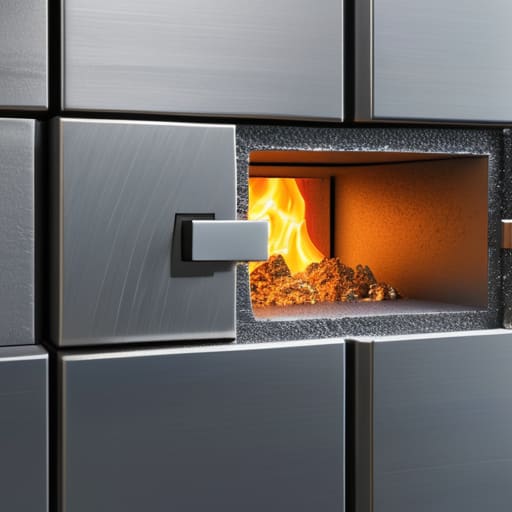
When you’re looking at the specs, don’t just get distracted by the thickness of the steel. Steel is great for stopping a crowbar, but it’s a terrible conductor for heat; it’ll soak up a fire like a sponge and cook whatever is inside. You need to look closely at the thermal insulation for security safes tucked between those steel walls. Most decent units use a concrete-like composite or a specialized gypsum material that releases moisture when heated, creating a buffer. If a manufacturer can’t tell you exactly what that filler is, they’re just selling you a heavy metal box, not a fire safe.
I’ve seen folks mistake a high-end humidity-controlled box for a true fire rated one. There is a massive difference between a fireproof safe vs water resistant safe, and getting them mixed up is a mistake you only make once. If you’re serious about protecting documents from extreme heat, you want a build that prioritizes density and moisture-retaining insulation over fancy digital locks or biometric scanners. The hardware might fail when things get hot, but the insulation is what actually keeps the internal temperature below the point where paper turns to ash.
The Unseen Work: Five Habits to Keep the Heat Out
- Check your seals every single season. Those rubber or composite gaskets that keep the heat out can dry out or crack just like anything else in a garage or basement. I’ve seen plenty of people trust a safe that’s been sitting for ten years without a once-over, only to find the seal has turned to dust when they actually need it.
- Watch where you set the foundation. If you’re putting a heavy safe on a wooden floor near a furnace or in a spot prone to moisture, you’re asking for trouble. Moisture can rot the floor or seep into the safe’s insulation, and a compromised safe is just a metal box when the temperature climbs.
- Don’t ignore the “secondary” heat. A fire doesn’t have to touch your safe to ruin what’s inside. If the room temperature spikes because of a nearby electrical fire, that heat can soak through the walls of the safe over time. Position your gear away from high-heat appliances or direct sunlight if you’re in a warmer climate.
- Keep your internal humidity in check. It sounds strange when we’re talking about fire, but a safe that’s been fighting moisture is a safe with compromised insulation. If the internal materials have degraded due to dampness, they won’t hold up nearly as well when the real heat arrives.
- Treat your safe like a piece of machinery, not furniture. That means testing the door movement and checking for any signs of heat-induced warping after any significant temperature changes in your home. If the door doesn’t seat perfectly, that fire rating on the sticker doesn’t mean a damn thing.
The Bottom Line on Fire Protection
Don’t mistake a high UL rating for a magic shield; understand that those ratings are tested under specific conditions, and your real defense is how much extra thermal mass you can add to the setup.
Material matters more than the lock—invest in a safe with thick, composite insulation rather than just a fancy keypad, because a lock won’t do you much good if the heat has already warped the frame.
Safety is a habit of maintenance, not a one-time purchase, so check your seals and the integrity of your safe’s housing every season to ensure your protection hasn’t degraded before you actually need it.
The Final Check
At the end of the day, protecting your gear isn’t about buying the most expensive box on the shelf; it’s about understanding what that box can actually do when the heat climbs. You’ve looked at the UL ratings, you’ve weighed the heavy-duty materials against the reality of your home’s layout, and you’ve learned that a rating is just a number unless you pair it with the right environment. Don’t forget that a fire-rated safe is only as good as its placement and the secondary layers of protection you wrap around it. If you ignore the material science or the installation basics, you’re just storing your valuables in a very heavy, very expensive oven.
I’ve spent twenty years watching people overlook the small, unglamorous details in favor of the flashier stuff. They want the high-tech locks, but they forget to check the seals or the floor stability. Real security—the kind that actually holds up when things go wrong—is built on consistent, disciplined habits. Treat your safe like you treat your rifle: maintain it, respect its limits, and never assume it’s invincible just because it’s heavy. Get the foundation right now, while things are calm, so that if the worst happens, you aren’t left wondering if you could have done more.
Frequently Asked Questions
If I've already got a standard security safe, can I add extra fire protection to it, or am I better off starting from scratch?
Look, if you’ve already invested in a security safe, don’t go tossing it in the trash just yet. You can bolster it, but you have to be smart about it. Adding a dedicated fire box inside your larger safe is the most practical move—it gives you that secondary layer without the cost of a whole new unit. Just don’t get overconfident; a security safe isn’t a fire safe, and you can’t just “fix” the steel.
How much does the actual location of the safe in my house—like a basement versus an upstairs closet—change how it handles a fire?
Where you put the safe matters just as much as what it’s made of. A basement is your best bet; it’s surrounded by earth and stays cooler longer, giving you a massive head start. An upstairs closet is a different story. Heat rises, and once that fire hits the ceiling, an upstairs safe is getting cooked from the top down much faster. If you can’t go low, stay away from vents and windows.
When I'm looking at those UL ratings, how much of a difference does it actually make between a 30-minute rating and a two-hour rating for my specific gear?
Look, a 30-minute rating is a baseline, not a guarantee. It means the internal temp stays low enough to save paper for half an hour. But if you’re storing sensitive optics or high-end electronics, that heat soak happens much faster than it does with a stack of documents. If you’ve got gear you can’t afford to replace, you aim for the two-hour mark. It’s about the buffer between a small kitchen fire and a total loss.




